
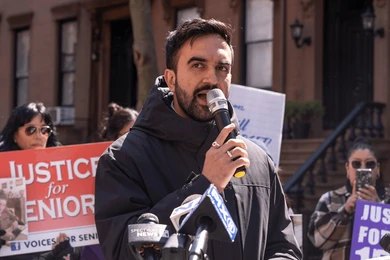
New York’s progressive mayor Zohran Mamdani mourned an Al Jazeera cameraman the Israeli military says was a Hamas sniper, igniting a clash over truth, terrorism, and press freedom.
Story Snapshot
- Israeli military says Ahmed Wishah was a Hamas sniper; Al Jazeera says he was a cameraman [1][3][6].
- Strike hit a home in Gaza’s Bureij camp; Wishah was killed in the blast [1][6].
- Mamdani publicly mourned Wishah as a journalist, drawing sharp criticism.
- No independent evidence has settled whether Wishah was only a journalist [1][3].
Conflicting Claims About Who Was Killed
Al Jazeera says Ahmed Wishah worked as a cameraman for its Arabic live channel and died after a strike on a home in the Bureij camp in central Gaza on June 20, 2026 [6]. The network calls the Israeli claim that he was a Hamas terrorist “baseless” and part of a smear campaign [3]. The Israeli military told major outlets it targeted Wishah and said he was a Hamas operative who worked as a sniper, killed with two other Hamas members [1].
Reporters and family in Gaza mourned Wishah as a kind, principled colleague and a videographer [3][7]. NBC News reported the Israeli military’s assertion but noted no public evidence was provided at the time of the statement [1]. The location of the strike, the Bureij refugee camp, was described by Al Jazeera in its own statement, which also reaffirmed Wishah’s role as a cameraman [6]. These competing claims leave open questions that outside reviews could help answer.
Mamdani’s Tribute Draws Fire At Home
New York City Mayor Zohran Mamdani publicly mourned Wishah as a slain journalist, echoing Al Jazeera’s description and tone. Critics argue the mayor dismissed the risk that terror groups embed within media roles. Supporters say a city leader can honor media workers killed in war. The core dispute turns on evidence. The Israeli military’s spokesman labeled Wishah a terrorist; Al Jazeera rejected it. Neither side has released independently verified proof that closes the case [1][3].
For many Americans, especially after years of media bias and campus radicalism, the standard is simple: show the receipts. Al Jazeera can publish employment records and broadcast credits tied to Wishah’s work. The Israeli military can release the intelligence it says justified the strike. Until that happens, the public sees dueling statements and little hard data. That vacuum fuels mistrust and hardens views on both sides of the debate [1][3].
What We Know, What We Don’t
Known facts are narrow and important. Al Jazeera says Wishah was its cameraman; colleagues vouched for him; and he died in a strike on a home in Bureij on June 20, 2026 [3][6]. The Israeli military confirms it carried out the strike and asserts Wishah was a Hamas terrorist and sniper, killed alongside two Hamas operatives [1]. Missing are public third‑party forensics, site evidence, or verified records that prove either exclusive role: journalist only, or terrorist posing as press [1][3].
That gap matters for U.S. policy and values. Americans stand for free speech, a free press, and the right to self‑defense. Both can be true at once. Terrorists who hide behind cameras violate the laws of war and endanger real journalists. Governments that hit media workers without proof chill reporting and erode trust. The burden is on each claimant to prove its case. Until then, leaders should avoid absolutist claims and demand transparency from both parties.
What Accountability Should Look Like
Simple steps can cut the fog. Al Jazeera can release assignment logs, footage reels with timestamps, payroll records, and supervisor attestations tied to Wishah’s shoots. The Israeli military can publish targeting files, surveillance clips, and the specific links it says show sniper activity. A neutral panel could review redacted evidence to protect sources. These actions would let the public judge the facts, not the spin, and would honor both press freedom and security.
Why This Hits Nerves In America
People remember years of slanted stories, soft‑pedaled extremism, and officials talking down to them. They also respect the work of honest reporters. When a big‑city mayor takes sides before the facts are shared, it looks like politics first. When a military makes a grave claim without showing proof, it looks like “trust us.” Both fail basic accountability. The right response is consistency: show evidence, protect civilians, punish terrorists, and defend real journalism.
Bottom Line For Readers
The stakes are high: truth in war, safety for real journalists, and moral clarity against terror. Here is what holds up. Ahmed Wishah died in an Israeli strike in Bureij; Al Jazeera calls him a cameraman; the Israeli military calls him a Hamas sniper [1][3][6]. No independent evidence has closed the case. American leaders should press both sides to show proof. That is how we defend free speech, stop propaganda, and keep our nation aligned with justice and common sense.
Sources:
[1] Web – Mamdani Mourns Death of Journalist Whom IDF Says Was a Hamas Terrorist
[3] Web – The Israeli military said Saturday it had carried out a strike that …
[6] Web – Following claims that an Al Jazeera cameraman named Ahmed …
[7] Web – Al Jazeera cameraman Ahmed Wishah has been killed in an Israeli …
Can you prove what you say?