
Los Angeles put a “peace ambassador” on the payroll—and federal agents later hauled him away as an alleged violent gang figure, detonating a trust crisis bigger than one bad hire.
Story Snapshot
- Los Angeles’ Peace Ambassadors program exists as a taxpayer-backed violence-prevention effort [3]
- Federal authorities publicly allege a city-linked “ambassador” was a convicted murderer and active gang member (social posts embedded below)
- The city has not published robust vetting criteria, leaving residents to guess how this happened [3]
- The episode exposes a national pattern: peace branding colliding with terrorism and violent-extremism politics [8][2]
Los Angeles launched a feel-good program without feel-safe guardrails
Los Angeles Council District 1 established a Peace Ambassadors initiative to “prevent violence before it starts and to support Angelenos” during crises, framing it as a civic, community-forward project rather than a security function [3]. The promise sounded noble. The practical question was obvious: Who gets the badge, and how are they vetted? The city’s webpage touts the concept but does not spell out background-screening standards, disqualification categories, or real-time oversight triggers. That omission created the vacuum critics are now filling with outrage [3].
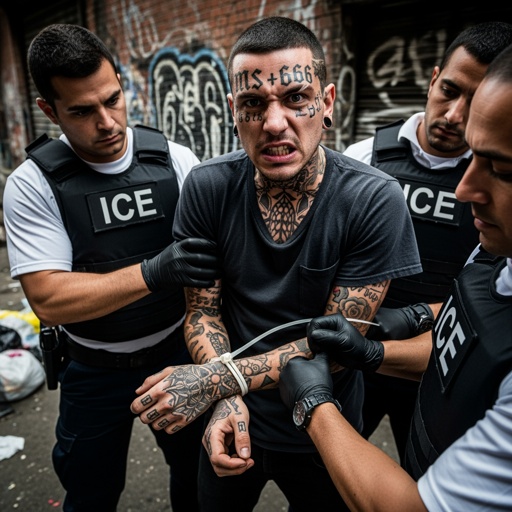
Federal law enforcement announcements and media posts alleged that a taxpayer-funded ambassador was, in fact, a convicted murderer and active member of a violent street gang. Those claims turned a branding exercise into a credibility crisis in hours. City residents do not need insider jargon to see the failure mode: when government confers moral authority and public funds, it must verify eligibility against criminal history, gang affiliation indicators, and probation or parole conditions—before appointment and continuously thereafter. Anything less invites foreseeable harm and erodes civic confidence.
Blue City's Paid 'Peace Ambassador' Actually A Violent Gangbanger: DOJ: 'Hardworking tax payers of Los Angeles deserve better' https://t.co/Pfgi8o4VuH
— Daily Caller (@DailyCaller) May 29, 2026
Peace labels carry power; that power demands proof
The United Nations maintains a formal “Messenger of Peace” designation and treats selection as an honor with reputational gravity, precisely because “peace” carries moral authority with global audiences [8]. Officials know that once a government stamps “peace ambassador” on a person, the public perceives endorsement. Cities can use symbolic roles to mobilize neighborhoods, but symbolism without standards becomes risk. Basic common sense, aligned with conservative principles of accountability, says public trust should not rest on opaque selection or wishful thinking when safety and taxpayer money are at stake.
Peace and security researchers warn that labels and narratives do not neutralize risk; they measure it. The Institute for Economics and Peace publishes the Global Terrorism Index and other tools to translate sentiment into risk management, emphasizing verifiable indicators over slogans [2]. Municipal programs that traffic in moral branding should borrow that discipline: define risks, test assumptions, and instrument the process. Write the rules down. Publish them. Audit them. If a program cannot survive daylight, it does not deserve tax dollars.
The core failure: process, not just a person
City leaders can blame a single “bad apple,” but the public asks a tougher question: what process certified the apple as good? The city page describes goals and inspiration, not hard gates or background thresholds [3]. A defensible model would require a documented criminal background review, gang-affiliation screening using lawfully obtained indicators, supervisor signoff, and automatic removal upon new arrests or violations. It would also include quarterly re-checks and a public-facing eligibility rubric. Conservatives and moderates alike can agree: prevention programs need prevention-grade controls.
A convicted murderer who federal authorities say was working as a taxpayer-funded “Peace Ambassador” for the City of Los Angeles was arrested Friday for allegedly illegally possessing body armor near MacArthur Park. https://t.co/7F2UNdQw25 pic.twitter.com/A56kStaKUl
— KTLA (@KTLA) May 29, 2026
Accusations of “terrorist” ties often surface whenever peace branding intersects with violence politics. Governments themselves wrestle with the optics; even global bodies constantly balance counterterrorism vigilance with peace messaging [6]. The lesson for cities is practical, not ideological: you cannot outsource credibility to a title. You earn it with transparent vetting, measurable results, and a willingness to suspend or terminate participants the moment facts conflict with mission. Voters accept second chances; they reject second-rate due diligence.
What accountability should look like tomorrow morning
City officials should publish the Peace Ambassadors’ selection criteria, vetting steps, and oversight chain within 72 hours, with redactions only for lawful privacy. Any participant with a disqualifying record under the new standard should be removed pending review. An independent auditor should verify compliance quarterly and report findings publicly. Program metrics must shift from feel-good anecdotes to hard outputs: incidents prevented, community partners engaged, and violation rates. If leadership balks, taxpayers deserve a funding freeze until controls meet basic safety expectations [3][2].
Sources:
[2] Web – Security Council lifts terror-related sanctions on Syrian President
[3] Web – Institute for Economics & Peace | Experts in Peace, Conflict and …
[6] Web – Vision of Humanity | Destination for Peace
[8] Web – The Iranian Regime’s Decades of Terrorism Against American Citizens