
A top economist now says America’s odds of recession are nearly triple normal levels, even as Wall Street parties like nothing is wrong.
Story Snapshot
- Moody’s Analytics chief economist Mark Zandi now pegs U.S. recession risk at about 40%, versus a historical norm near 15%.
- Zandi argues jobs, incomes, and consumer spending are weakening beneath the surface, leaving “fragile” growth and rising layoff risk.
- He warns stocks are “disjointed” from the real economy, driven by a narrow group of artificial-intelligence giants with dot-com-era valuations.
- He says policy mistakes on tariffs, immigration, and Middle East conflict could turn elevated risk into an outright downturn.
Why a 40% Recession Probability Has People Worried
Moody’s Analytics chief economist Mark Zandi has put the probability of a United States recession in the next year at roughly 40%, nearly three times the roughly 15% baseline risk he cites for a typical year, and he describes that level as “very elevated” and “very uncomfortable.” [1][5] He stresses that 40% is still below a coin flip, but he argues it shows how close the economy is “to the edge,” especially given today’s already anxious political and geopolitical climate. [5]
Zandi links this elevated risk directly to weakening fundamentals rather than headlines alone. In a recent interview, he said underlying monthly job growth has slowed toward 50,000 to 75,000 positions, a pace he argues is not enough to keep unemployment from drifting higher over time. [5][2] He warned that negative monthly payroll prints are plausible and that historically, once job growth slips into negative territory and stays there, the economy is usually already in recession. [2][5]
Mark Zandi warns America is ‘close to the edge’ with 40% recession risk — and says US stocks are detached from reality more than ever#RecessionRisk #Stocks #PersonalFinancehttps://t.co/GuzbJ4NpIZ
— Moneywise (@moneywisecom) May 20, 2026
Jobs, Incomes, and Consumers: The Fragile Real Economy
Recent labor-market data still look decent on the surface, with an April report showing about 115,000 jobs added and unemployment holding near 4.3%, but Zandi contends this masks growing weakness. [5] He points to evidence that the overall labor force has flattened or even shrunk slightly since the start of the year, and that foreign-born labor-force growth has shifted from 4%–5% a year ago to actual decline, reducing the supply of workers and complicating the picture. [2]
Beyond jobs, Zandi stresses that what families can actually buy with their paychecks has stalled out. He notes that real disposable income—income after taxes and inflation—has shown roughly zero percent growth over the past year, meaning purchasing power is no higher than it was twelve months ago and could begin to fall. [1][4] He ties this to reports of lower- and middle-income households increasingly living paycheck to paycheck and trading down to cheaper goods just to keep up. [4]
Stock Market Highs and the Fear of an Artificial-Intelligence Bubble
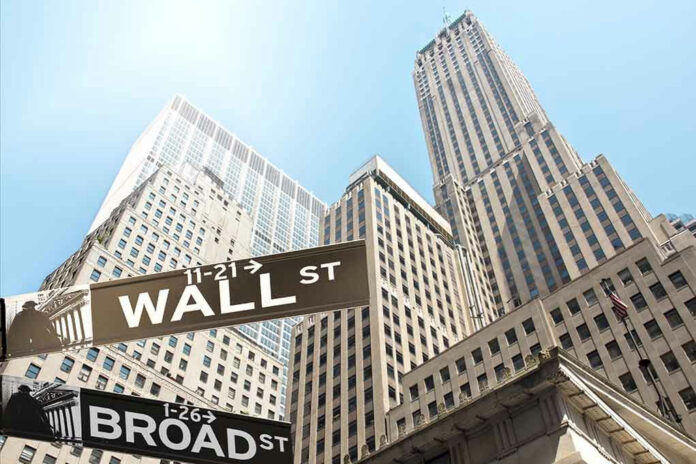
While stocks hover near record levels, Zandi insists “the stock market’s not the economy” and says the gap between Wall Street and Main Street is wider than at any time in his 36-year career as a professional economist. [1][4] He argues that a narrow slice of large technology “hyperscalers” and chip companies tied to artificial intelligence are pulling indexes higher, while large parts of the economy remain weak, creating what he calls an increasingly “disjointed” relationship between market prices and real economic conditions. [1]
That disconnect feeds directly into his recession warning because households and retirees are being told by rising account balances that everything is fine, even as their wages, hours, and living costs tell a different story. Zandi suggests this mismatch leaves both parties—workers and investors—exposed to a sudden repricing if growth slows further or if earnings from artificial-intelligence leaders fail to justify current valuations. [1][4] For readers who already suspect Wall Street and Washington protect each other first, his comments reinforce that fear.
Policy Choices, Oil Prices, and a Government That “Will Not Get Out of Its Own Way”
Zandi is careful to say a recession is not inevitable; he has argued the United States could still “get out of its own way” and avoid a downturn if leaders change course. [4] In his view, that would mean abandoning broad-based tariffs, avoiding heavy-handed immigration crackdowns that shrink the labor force, and easing off foreign-policy decisions that fuel new conflicts. [4] He also stresses the importance of keeping the Federal Reserve independent so it can respond to data, not political pressure, when setting interest rates. [4]
Stocks are pricing perfection while the economy looks shaky. Mark Zandi says markets are increasingly disconnected from fundamentals, AI hype is doing heavy lifting, and recession odds stay at 40% over the next 12 months. Risk is the story. #stocks #economy pic.twitter.com/kIPFURdDnz
— geekopedia (@geekopediax) May 20, 2026
Energy and war risks sharpen his concern that Washington’s choices now directly threaten ordinary Americans’ livelihoods. Zandi has warned that the ongoing conflict with Iran and related tensions in the Gulf could push oil prices high enough to tip a fragile economy into recession, estimating that an average oil price near $125 per barrel in the second quarter could be sufficient to do serious damage. [3] He argues that, even before the conflict, recession odds were “on the rise,” and that letting tensions escalate would make a downturn “more than likely” by later this year. [3]
What This Means for Americans Fed Up with the Status Quo
For many conservatives and liberals alike, Zandi’s message will sound familiar: the numbers say the system is fragile, yet the political class keeps gambling with tariffs, wars, and short-term market sugar highs. His 40% recession probability is not a guarantee, but it is a quantitative way of saying the margin for error has shrunk dramatically. [1][5] That should matter to anyone worried about whether the next shock gets cushioned for elites while everyone else takes the hit.
Sources:
[1] Web – Mark Zandi puts U.S. recession odds at 40%, warns economy is ‘on …
[2] Web – Moody’s Analytics chief economist Mark Zandi warns of high risk of …
[3] Web – Moody’s Mark Zandi: Risk of recession was increases prior to war in …
[4] Web – Recession Risk Is ‘Rising Significantly,’ but US Can Still Avoid It
[5] YouTube – Why Mark Zandi Says the Economy Is “Fragile”