
As Washington argues over aid and budgets, Ukraine just showed how cheap homemade drones can do the work of million‑dollar U.S. rocket systems and quietly rewrite the rules of modern war.
Story Snapshot
- Ukraine’s new mid‑range attack drones are striking Russian rear areas that U.S. HIMARS rockets have not regularly hit for years, creating fresh pressure on supply lines and command posts.[1][2]
- These drones are cheaper, easier to mass‑produce, and more flexible than big Western systems, raising hard questions about how much money the West has sunk into older weapons that may already be outdated.[1][3]
- Analysts say the drone campaign is helping Ukraine claw back territory and turn once “safe” Russian rear zones into new kill areas, but they also warn that Russia is building similar tools.[2][5]
- The rise of mid‑range drones shows how elites in every capital can now wage long‑range war with low political cost, while ordinary people on both sides pay the price as infrastructure, fuel, and rail lines burn.
Ukraine’s Mid‑Range Drones: Filling the Gap HIMARS Left Open
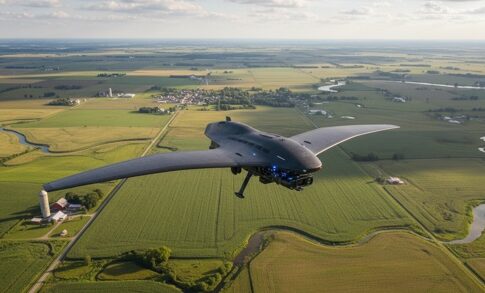
Ukrainian officers and analysts say a new class of mid‑range “winged” drones now hits Russian rear areas roughly 20 to 300 kilometers from the front, a band once covered mainly by U.S.‑made High Mobility Artillery Rocket Systems, or HIMARS.[1][2] These drones fly like small planes and carry larger warheads than the tiny first‑person‑view quadcopters people see online. They are used against fuel trucks, command posts, air defense systems, and warehouses that keep Russian units supplied.[1][3] Some models use onboard artificial intelligence that can keep homing in if Russian jamming cuts the control signal in the final seconds of the attack.[1]
Several experts say these drones bring back the “HIMARS effect” that faded when Russia adapted and Western rocket supplies slowed.[1][3] HIMARS once shocked Moscow by smashing depots and bridges behind the lines, but Russian forces moved stockpiles farther away and thickened their air defenses. Ukrainian engineers responded by building drones that can go as far or farther than guided rockets, at a fraction of the cost, and that can loiter over roads to catch moving convoys, something HIMARS cannot easily do.[1] A Ukrainian analyst counted video evidence of at least 100 destroyed fuel trucks and similar targets in just a couple of months.[1]
Turning “Safe” Rear Areas Into New Kill Zones
According to Business Insider and Ukrainian officials, these mid‑range drones are turning Russian rear areas that were once considered safe into active kill zones.[1][2] Ukraine is striking warehouses, transport hubs, and command centers 20 to 300 kilometers from the front, forcing Russia to push logistics even farther back and to reroute road and rail traffic.[2][3] A Ukrainian political analyst said that this shift creates a psychological shock as well: areas that Russian troops believed were secure are now under regular attack, which erodes morale and trust in their own commanders.[2] Moving depots deeper into Russia also means longer delivery times and more strain on fuel and trucks.[2]
Conflict researchers at the Institute for the Study of War linked this mid‑range drone campaign to a rare metric that cuts through the propaganda: Russia suffered a net loss of territory in the Ukrainian theater in April 2026, its first since Ukraine’s 2024 incursion into Kursk region.[2] Ukraine’s president has called mid‑range strike assets a top priority, saying they allow regular hits on logistics, air defenses, and command posts up to about 150 kilometers away.[2] The country has steered more than $110 million to units and industry to scale these operations and “systematically destroy enemy logistics and supply lines,” aiming not just to win headlines but to slowly grind down Russia’s ability to attack.[2]
Mass Production, Cheap Precision, and a New Kind of Arms Race
Ukrainian media and Western think tanks describe a clear logic behind this shift: drones are cheaper to build in large numbers than rockets, easier to adapt, and do not require the same expensive launch vehicles.[3][5] A Ukrainian defense outlet reported that engineers are designing mid‑range drones that can carry warheads up to about 100 kilograms and be controlled over tens or hundreds of kilometers.[4] One defense source said that if Ukraine can produce around 1,000 airframes a month and use them systematically, they could significantly weaken the entire Russian logistics system.[3] These designs aim to partially copy the HIMARS effect at lower cost, while also going deeper into Russian rear areas than many Western‑supplied rockets are allowed to strike.[4][6]
Global research shows this is part of a bigger trend, not a one‑off trick. Analysts estimate that by 2025 drones of all kinds were responsible for 60 to 70 percent of losses in the Ukraine war, and Ukraine alone was on track to produce over a million drones in a single year. One study notes that current air defense systems can still shoot down many drones, which limits how “decisive” they are, but cheap mass allows attackers to keep probing for gaps. In other words, elites can now fight extended, long‑range campaigns using swarms of low‑cost machines, while spending far less political capital than they would lose by sending large numbers of troops. That pattern feeds the sense among many Americans that modern wars are managed from afar by a small class of insiders, with both taxpayers and foreign civilians bearing most of the risk.
Why This Matters for Americans Watching a Remote War
For U.S. readers who feel both parties have failed to control spending or protect national interests, this drone shift raises hard questions. Ukraine’s success with homegrown mid‑range drones shows that agile, lower‑cost tools can sometimes outperform huge, slow programs built by major defense contractors.[1] While Washington argues over big‑ticket items and omnibus budgets, a smaller country under siege has fielded “HIMARS in the sky” for tens of thousands of dollars per shot, not millions.[7] That contrast will fuel debate over whether America’s own defense money is being used wisely or mainly feeding a permanent war industry far removed from everyday citizens.
A massive strike on Ukraine. Where they hit
This night, the Russian Armed Forces launched a massive strike with high-precision long-range weapons – air, ground, and sea-based – in conjunction with attack drones. They struck with precision, in response to the terrorist acts of… https://t.co/6nzdiByHqf pic.twitter.com/0auav5PbaF
— 🇷🇺 STANISLAV KRAPIVNIK 🇷🇺 (@STANISKRAPIVNIK) June 15, 2026
At the same time, think tanks warn that drones do not magically end wars; they make it easier for leaders everywhere to launch more strikes with less public backlash. Drone warfare lowers political and human costs for those ordering attacks, which can tempt governments and entrenched security bureaucracies to use force more often, not less. As Ukraine and Russia trade mid‑range drone blows against fuel depots, rail yards, and power sites, ordinary people on both sides live with blackouts, lost jobs, and rising prices. For Americans already angry about inflation, high energy costs, and endless foreign entanglements, this “remote revolution” is another sign that twenty‑first‑century warfare often serves the priorities of distant elites first, and the needs of working families last.
Sources:
[1] Web – Ukraine’s newest attack drones are delivering the kind of strikes that …
[2] Web – Ukraine’s new mid-range strike drones are turning Russia’s once-safe …
[3] Web – Hitting the rear and easing the load on HIMARS: Ukraine’s new mid …
[4] Web – Hitting the rear and easing the load on HIMARS: Ukraine’s new …
[5] Web – Ukraine Needs New Mid-Range Strike Drones
[6] Web – Frontline report: Ukraine uses new domestic missile drone for long …
[7] YouTube – Ukraine Can’t Get Enough HIMARS – So It Invented a Flying Version That …