
When the Trump administration froze critical housing funds for the U.S. Virgin Islands’ “Minnesota of the Caribbean,” it did so under the banner of fighting corruption and mismanagement—yet the evidence shows a far more complex interplay of genuine local failures, aggressive federal leverage, and a broader pattern of disaster-aid politics.
At a Glance
- HUD suspended the U.S. Virgin Islands Housing Finance Authority (VIHFA) from receiving further federal housing disaster funds, citing a decade of audits, weak controls, and a senior executive’s fraud conviction.
- The Trump administration publicly framed the move as protecting taxpayers from “mismanagement and corruption,” echoing its rationale for delaying billions in Puerto Rico disaster aid.
- House Democrats and watchdogs later documented how the administration erected procedural hurdles and missed legal deadlines in Puerto Rico’s case, suggesting politics and austerity strategy were also driving these funding choke points.
- Local corruption and mismanagement in island jurisdictions are real, but they coexist with federal missteps and deliberate slow-walking of disaster dollars across multiple states and territories.
- The “Minnesota of the Caribbean” episode illustrates how disaster aid has become a tool of fiscal and political power, not just a vehicle for recovery.
From Paradise to Penalty: Why HUD Cut Off ‘Minnesota of the Caribbean’
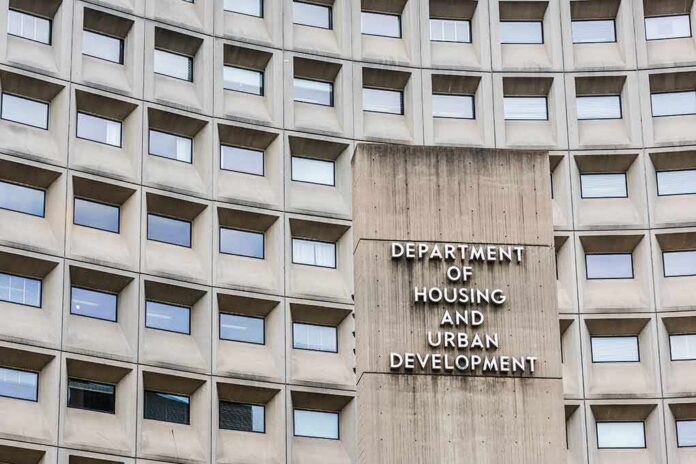
The starting point is straightforward: the Department of Housing and Urban Development (HUD) suspended the U.S. Virgin Islands Housing Finance Authority (VIHFA) from receiving additional federal housing disaster funds. HUD’s suspension notice, disclosed in reporting, did not rest on vague rhetoric; it pointed to “substantial evidence” that VIHFA had failed to comply with federal aid obligations, lacked basic internal financial controls, and operated amid serious fraud risks and conflicts of interest.
Over roughly a decade, multiple audits questioned millions of dollars in costs and flagged weak financial controls, inadequate oversight of projects, poor fraud-risk management, and inaccurate reporting across VIHFA’s portfolio. A 2026 audit concluded that despite overseeing $1.9 billion in disaster recovery funding, VIHFA had still not implemented a structured fraud-prevention framework. HUD cited that failure as especially serious because disaster-recovery programs, by design, move large sums quickly into complex contracting environments where weak controls invite abuse.
The Contracting Scheme that Triggered a Federal Freeze
The most concrete allegation, and the one HUD itself described as sufficient “standing alone” to call VIHFA’s responsibility into question, involved the former chief operating officer, Darryl Richardson. According to HUD’s suspension notice, Richardson engaged in a federal contracting fraud scheme tied to disaster clean-up contracts, including kickbacks of at least $107,000 on one contract.
Contracting fraud of this kind is not merely a local scandal; under HUD’s rules, an officer corruptly awarding disaster clean-up contracts violates core federal oversight and integrity requirements. HUD argued that VIHFA failed to respond appropriately even after Richardson’s indictment and conviction, leaving fraud controls largely unchanged and continuing to certify, falsely, that it had “proficient financial controls,” adequate safeguards against conflicts of interest, and compliance with applicable laws.
In this light, the suspension operates as a classic federal remedy in grant administration: when an authority overseeing billions in disaster dollars cannot credibly demonstrate basic controls—and has a recent, documented contracting-fraud conviction in its leadership—HUD has the legal and policy basis to halt further flows while it reassesses risk. VIHFA was given 30 days to request a hearing, underscoring that this was a formal enforcement action with due-process mechanisms, not simply a press statement.
Puerto Rico as Precedent: Corruption Narrative Meets Funding Delays
To understand the stakes of the Virgin Islands case, you have to place it alongside what happened in Puerto Rico after Hurricane Maria. There, HUD and the White House used similar language—“mismanagement,” “corruption,” “protecting taxpayers”—while delaying or constraining roughly $20 billion in congressionally approved disaster aid.
HUD Secretary Ben Carson defended withholding Puerto Rico funds by pointing to “corruption in Puerto Rico” and instability in its government, claiming it would be irresponsible to send an “unprecedented amount of money” without “appropriate controls.” White House messaging touted a commitment to protect “survivors and taxpayers from mismanagement and corruption,” framing additional oversight, separate funding notices, and extra conditions as common-sense safeguards.
Yet an inspector general report later found that the administration erected unprecedented procedural hurdles that stalled the funds and then obstructed the investigation into the holdup. The Office of Management and Budget pushed HUD to issue separate funding notices for Puerto Rico and the Virgin Islands, and to attach unusual prerequisites—such as overhauls to property-management records and suspension of minimum wage on federal contracts—raising questions inside HUD about the legal authority for such demands.
The report also noted that Puerto Rico, unlike 17 other disaster jurisdictions, had complied with HUD’s oversight requirements but still saw its funds delayed past statutory deadlines. Congressional testimony captured this asymmetry: of all states and localities receiving disaster relief, Puerto Rico alone had its money held back after meeting the conditions HUD had set.
Congressional Pushback: When Oversight Becomes ‘Illegal Withholding’
The administration’s Puerto Rico posture drew a sharp response from House Democrats, who accused HUD of “illegally withholding” hurricane aid by missing a congressionally mandated deadline to publish funding notices. Members such as John Larson, Darren Soto Hernández, and Alexandria Ocasio-Cortez launched investigations into whether HUD had exceeded its authority and used corruption rhetoric as cover for political or ideological objections to sending large sums to a fiscally distressed territory.
Democrats emphasized the mismatch between the administration’s claim that Puerto Rico had received “too much money” and the reality that only a fraction of the allocated funds—about $1.5 billion of $20 billion—had actually been disbursed at key points in the recovery. The missed September 4 deadline to issue funding notices for Puerto Rico, coupled with internal testimony that HUD intentionally withheld the funds, underpinned the charge that what was packaged as prudent oversight had crossed into unlawful obstruction.
What is crucial for understanding the Virgin Islands case is that the same actors—HUD leadership, the White House budget office, and the administration’s political appointees—were already on record using corruption narratives in Puerto Rico while simultaneously slow-walking or withholding funds in ways later criticized by inspectors general and congressional investigators. That history shapes how observers read the subsequent suspension of VIHFA, even when the local evidence of mismanagement is stronger.
Real Local Mismanagement, Real Federal Failures
None of this erases genuine problems on the islands. Puerto Rico had documented cases of misused HUD funds, including the arrest of a mayor and two former finance officials for stealing millions of federal dollars. In the Virgin Islands, the Richardson contracting scheme and the decade-long trail of troubling audits speak to a small jurisdiction struggling to manage very large, complex disaster programs.
At the same time, federal performance has been deeply flawed. FEMA lost track of more than a quarter-billion dollars in food and supplies intended for Puerto Rico, according to a watchdog report on its hurricane response. Advanced contracts for emergency meals failed spectacularly, with one contractor delivering only 50,000 of the 30 million “self-heating meals” it was paid to supply before the contract was terminated.
Years after Maria, FEMA had disbursed just a fraction of the estimated $90 billion in damage—documents show only $3.3 billion sent to Puerto Rican authorities a year and a half after the storm. Later oversight reports catalogued FEMA’s inconsistent strategy, poor tracking, and mismanagement of millions in relief funds. In other words, mismanagement was not the monopoly of local officials; the federal apparatus itself faltered at multiple points.
Chaotic Austerity: Disaster Aid as a Political and Fiscal Tool
By the mid-2020s, analysts began describing the Trump administration’s disaster policy as a form of “chaotic austerity”—a deliberate strategy to curb federal exposure by stalling disbursements, politicizing declarations, and suspending mitigation funding. Research shows three recurring tactics: making fewer and more politicized disaster declarations, delaying reimbursements to shift costs back onto states and territories, and ending or pausing mitigation programs such as Hazard Mitigation Grant Program and Building Resilient Infrastructure and Communities.
The Disaster Relief Fund, a “no-year” account that remains available until expended, provides the structural flexibility to do this; funding can technically continue even during a government shutdown, but new obligations can be rationed or frozen by administrative decision. In 2025, for example, the administration ordered a freeze of certain federal grants and loans, and by early 2026 watchdogs estimated roughly $17 billion in disaster aid was being held up pending high-level approvals.
Framed for the public as fiscal responsibility and anti-corruption vigilance, these maneuvers simultaneously reduce immediate federal outlays, increase political leverage over recipient governments, and appeal to taxpayers wary of waste. They also lengthen recovery timelines dramatically; previous research on housing aid shows that in many disasters, community development housing activities have not spent their first dollar until 20 months after the event and are still distributing funds two years later.
Where the Virgin Islands Case Fits in the Larger Pattern
Placed against this backdrop, the HUD suspension of VIHFA sits at the intersection of two truths. On one side, there is unusually strong evidence of local failure: years of audits questioning millions in costs, a glaring absence of fraud controls in an agency managing $1.9 billion in disaster funds, and a senior executive convicted in a contracting scheme involving six-figure kickbacks. Those facts justify heightened scrutiny and, in grant-administration terms, make a funding freeze a defensible response.
On the other side, we have an administration with a documented track record of turning disaster oversight into a political tool—missing statutory deadlines, layering on questionable conditions, and suppressing investigations that probed its own role in delaying aid. In Puerto Rico, federal watchdogs ultimately focused less on proving island corruption and more on examining whether the administration “deliberately slowed” the flow of recovery funds.
An honest assessment has to hold both realities at once. The Virgin Islands were not singled out without cause; the record of VIHFA’s mismanagement is unusually clear. But the timing, framing, and institutional pattern suggest that the same anti-corruption rhetoric used in Puerto Rico—sometimes unsupported by specific evidence—was also part of a broader effort to ration and control disaster spending across the map.
What It Means Going Forward
For residents of the “Minnesota of the Caribbean,” the practical impact of HUD’s suspension is stark: yet another delay in long-promised housing repairs and infrastructure stabilization, in a territory where “blue-tarped roofs” and a teetering power grid still mark communities nearly a decade after major storms. For policymakers and taxpayers, the episode is a case study in the double-edged nature of federal oversight. Strong controls and enforcement are essential when billions are at stake, but when oversight tools become entangled with political or austerity agendas, they can undermine the very purpose of disaster aid.
The long-term challenge is not simply to decide whether Puerto Rico or the Virgin Islands are “corrupt” or whether Washington is “punishing” them. It is to build a disaster funding system that can distinguish between real local risk and rhetorical cover, that enforces accountability on both local authorities and federal agencies, and that delivers recovery aid in time frames measured in months and years—not decades. That work will outlast any single administration—and for communities waiting under tarps and on fragile grids, it cannot wait indefinitely.
Sources:
pjmedia.com, housingwire.com, thehill.com, pbs.org, nbcnews.com, theguardian.com, nlihc.org, cfr.org, miamiherald.com, socialism.com, americanoversight.org, oversightdemocrats.house.gov, axios.com, citizensforethics.org, abcnews.go.com, congress.gov, pew.org, fema.gov, therevolvingdoorproject.org, bakerdonelson.com, gao.gov