
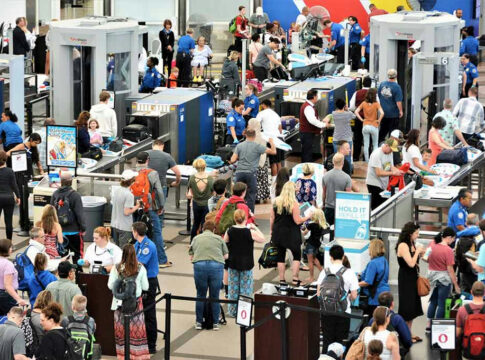
Mandatory Ebola screenings at Hartsfield-Jackson Atlanta International Airport show how quickly public health policy can become a border-control question when Washington decides to widen the funnel for incoming travelers.
Quick Take
- The Centers for Disease Control and Prevention expanded enhanced Ebola screening to Atlanta on May 22, 2026.[2]
- The policy applies to travelers connected to the Democratic Republic of the Congo, Uganda, and South Sudan within the prior 21 days.[1][4]
- Officials say Atlanta is part of a layered containment plan that also includes overseas exit screening, airline illness reporting, and post-arrival monitoring.[2]
- Available reporting does not show a published Atlanta-specific risk model proving the added airport brings measurable extra protection.[2]
Why Atlanta Was Added
The Centers for Disease Control and Prevention (CDC) says Atlanta was added to the Ebola screening network effective May 22, 2026, alongside Washington-Dulles International Airport, with Houston scheduled to follow.[2] The agency said Hartsfield-Jackson had previously conducted enhanced screening and already had operational procedures in place, which made the airport a practical choice for expansion.[2] For travelers, the rule is straightforward: people tied to the affected countries within the last 21 days now face screening before continuing into the country.[1][4]
That screening includes a questionnaire, temperature checks, and evaluation for symptoms, according to broadcast reporting from Atlanta.[1][3] U.S. citizens returning through the designated airports are the main focus of the screening process, while foreign visitors and green card holders from the affected countries have been blocked from entering under the same public health arrival restrictions.[1][4] The structure is heavy-handed by design, but the government is treating Ebola as a threat that justifies tighter funneling at the border rather than scattered checks after the fact.[2]
What the Federal Government Says It Is Doing
The CDC describes the Atlanta expansion as only one part of a broader layered public health approach, not a stand-alone defense.[2] That approach also includes overseas exit screening, airline illness reporting, and post-arrival public health monitoring, with state health departments tracking travelers for 21 days after they clear the airport.[2][3] The goal is obvious: catch a possible case early enough to isolate it before exposure spreads beyond the traveler and into the public.
Officials are also emphasizing that the risk to the American people remains very low, even as they widen the screening net.[1] That statement matters because it undercuts the panic that often follows outbreak headlines while still acknowledging that the government sees enough danger to impose extra procedures.[1][2] In plain terms, federal authorities are not saying Ebola is already spreading here; they are saying the cost of missing even one imported case is high enough to justify the inconvenience.
Why Critics Question the Expansion
The public record provided here does not include a quantitative analysis showing that adding Atlanta materially improves detection compared with the earlier Washington-Dulles-only setup.[2] The CDC says the expansion is part of a layered strategy, but that is a policy explanation, not proof that the second airport yields a measurable gain in prevention.[2] That gap leaves room for skepticism from Americans who want clear evidence before accepting more airport screening, more federal control, and more travel disruption.
"Mandatory Ebola screenings have officially expanded to Hartsfield-Jackson Atlanta International Airport for travelers arriving from the DRC, Uganda, and South Sudan. 🚨
Those who pass will still face 21 days of strict symptom monitoring by local health departments.
— Mazi okwuoma (@MaziEzike_Nedu) May 26, 2026
Even so, the absence of a published Atlanta-specific risk model does not make the policy automatically invalid; it means the government has not publicly shown its work in the supplied record.[2] For readers who have grown tired of bureaucrats demanding compliance first and explaining later, that is a familiar frustration. The strongest argument for the screening is simple and conservative in the best sense: when a deadly virus is involved, officials may prefer a visible precaution over a costly mistake that could expose families and communities.
What Travelers Need to Know
Travelers who have been in the Democratic Republic of the Congo, Uganda, or South Sudan within 21 days of entering the United States should expect screening if they arrive through the designated airports.[1][4] The process is built around airport-based triage and follow-up monitoring, not automatic detention, and state health departments are part of the 21-day oversight after arrival.[3] For now, the policy reflects a familiar federal tradeoff: tighter entry procedures in exchange for a lower chance of importing a dangerous disease.[2]
Sources:
[1] Web – Ebola-related travel restrictions now include Atlanta’s Hartsfield …
[2] Web – Enhanced Ebola Airport Screening Expands to Atlanta – CDC
[3] Web – US names second airport for Ebola screening as cases in Congo …
[4] Web – Public Health Arrival Restrictions and Enhanced Ebola Screening