

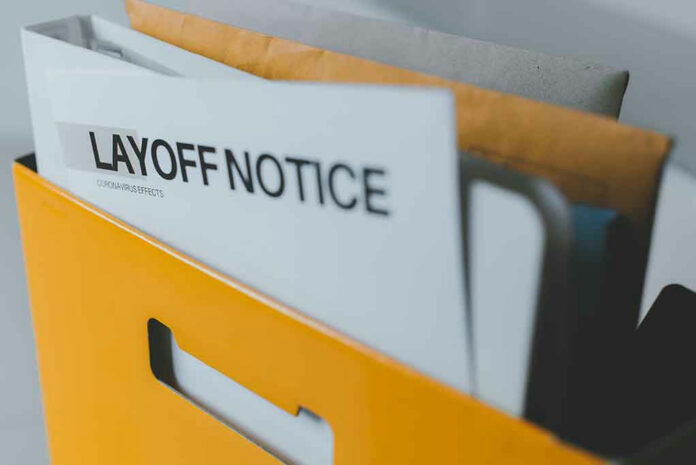
The central issue in this Meta lawsuit is not whether the company used artificial intelligence in workforce management; it is whether the metrics it chose turned protected leave and disability into a hidden penalty, converting ordinary performance scoring into a potentially discriminatory layoff filter.
Intro Header
- Twenty-six former Meta employees allege the company used AI-powered systems to help decide layoffs and that those systems disadvantaged workers with disabilities, medical conditions, or protected leave.
- The complaint says Meta relied on productivity-style signals such as work output, software activity, and AI token usage—measures that can be distorted or unavailable when someone is out on leave.
- Meta disputes the allegation, saying workforce decisions were made by people, not AI, and that the claims lack merit.
- The case matters because it may become an important federal test of how existing disability and leave laws apply when employers automate performance ranking.
What the lawsuit alleges, in practical terms
According to Reuters, 26 former Meta employees filed a federal complaint in Oakland accusing the company of using AI-powered software that disproportionately targeted workers with disabilities or medical leave when selecting employees for mass layoffs. The plaintiffs say the system leaned on factors such as productivity and AI token usage, then treated those scores as if they were neutral, even though leave status and disability can suppress the very metrics being measured.
That is the heart of the case. The allegation is not simply that Meta used software during a layoff round; many large employers now do that. The allegation is that the software encoded a structural bias: if a person was on protected medical or parental leave, or if a disability reduced output, the system could mark that worker as underperforming precisely because the worker had protections the law is supposed to respect. In legal language, that is the difference between a facially neutral tool and a tool with a disparate impact.
The lawsuit also claims Meta relied on internal AI systems, keystroke and activity-monitoring data, AI token-usage dashboards, and algorithmically assisted performance rankings to make layoff decisions. Those are not abstract categories. They are the kinds of measurements that reward constant online presence, continuous coding activity, and uninterrupted throughput—exactly the patterns that protected leave interrupts. If the complaint’s facts are borne out, the dispute will not turn on whether the data looked sophisticated, but on whether the data was meaningful in the first place.
Why protected leave and “productivity” are such a dangerous mix
Employers have long used performance metrics to sort workers, but automation changes the risk profile because software can amplify a bad proxy into a mass decision. A manager can sometimes recognize that a worker on medical leave should not be compared against colleagues who were in the office all month. An automated ranking system, by contrast, may simply convert absence into a lower score unless the employer deliberately adjusts for leave, accommodation, or disability. That is why the lawsuit’s focus on unadjusted metrics matters more than the mere presence of AI.
The complaint says those scores and ratings could not be accumulated by someone on protected medical or family leave, or by someone whose output was reduced by a disability. That allegation, if supported by the evidence, points to an old legal problem wearing a new technical costume. Civil rights law has never required employers to ignore performance. It has required them to avoid using methods that functionally punish protected status. When a system measures presence instead of contribution, it can quietly turn lawful absence into a disqualifying trait.
Meta’s public response is straightforward: the company says the claims “lack merit” and are “not based on facts,” and that workforce decisions were made by people, not AI. That distinction will matter in court, but not in the simplistic way companies sometimes imagine. A human sign-off does not immunize a process if the human decisionmaker is merely rubber-stamping an algorithmic ranking. The real question is whether the AI was advisory in the ordinary sense or whether it was the decisive engine that framed the layoff pool before any human review began.
Why this case lands in a much larger legal moment
This lawsuit arrives amid a broader contest over how existing employment law governs automated decision-making. The EEOC has already said employers remain responsible for AI-driven decisions under civil rights laws, including the ADA and Title VII, and California’s FEHA regulations now prohibit discrimination using automated decision systems in hiring and termination while recognizing a defense based on documented bias testing and mitigation. In other words, the law is not waiting for a special “AI statute” before it applies; regulators are treating automation as a method, not an exemption.
That is why Meta’s case is potentially important beyond Meta. If the plaintiffs can show that protected leave was not neutralized in the scoring process, the case will illustrate how disparate-impact theory applies to modern workforce analytics. Disparate impact does not require proof of malicious intent; it asks whether a neutral-looking practice falls more harshly on protected workers and whether the employer can justify and correct it. AI does not change that framework. It simply makes the bias easier to scale, and harder to spot before the damage is done.
The timing also reflects the broader tech industry’s labor pivot. Meta cut roughly 10 percent of its workforce in May as part of a wider restructuring tied to its AI push, and Zuckerberg publicly linked the layoffs to the demands of competing in AI. That context does not prove the lawsuit’s allegations, but it does explain why the case resonates. Workers are being evaluated inside companies that increasingly worship throughput, capacity, and machine-readable productivity. In that environment, anything that cannot be easily scored risks being treated as expendable.
AI Architect's Daily Briefing – July 15, 2026
1. Meta used AI to target workers on medical leave for layoffs.
Lawsuit claims Meta's AI tools flagged employees with disabilities or leave time via productivity metrics, leading to disproportionate cuts. 26 ex-employees suing.… pic.twitter.com/ovZVb0cgcV
— Shakthi V (@v_shakthi) July 15, 2026
What would actually prove or disprove the claim
The evidentiary fight will likely center on process, not slogans. If discovery shows that Meta’s layoff tooling automatically downgraded workers who were on leave, or failed to pause scoring for accommodation-neutral review, the plaintiffs’ theory becomes substantially stronger. If, on the other hand, Meta can show that humans independently reviewed cases, adjusted for leave, and used AI only as one of many inputs, the company’s defense becomes more credible. Those are the documents that will matter: scoring rubrics, internal guidance, exception-handling rules, and audit logs.
That is also why the complaint’s specific references to productivity, software activity, and AI token usage are significant. Those metrics are easy to collect and easy to fetishize, but they are poor substitutes for lawful performance evaluation when workers are absent because the law requires them to be absent. A system that counts only visible activity will always overvalue the worker who can stay online and undervalue the worker whose absence is protected. That asymmetry is not a bug in the legal theory; it is the legal theory.
For employers, the lesson is plain. Automated rankings are not automatically unlawful, but they become dangerous when they are not designed for leaves, accommodations, and other protected realities of employment. The more a company lets AI transform incomplete data into personnel decisions, the more it invites the argument that the machine did not merely assist management—it encoded management’s blind spots at scale. That is the dispute now landing in federal court, and it is likely to shape how lawyers, HR departments, and regulators think about AI-driven layoffs for years.
Sources:
zerohedge.com, indiatoday.in, marketscreener.com, reuters.com, about.fb.com, foxbusiness.com, reddit.com, cnbc.com