
When a foreign head of state threatens to haul U.S. immigration agents into court, it is not just a fight over one death; it is a collision of sovereignty, self-defense doctrine, and a growing record of migrants dying at the hands of ICE.
Key Points
- Mexican President Claudia Sheinbaum has moved from diplomatic protest to preparing legal action in U.S. courts over the death of Mexican nationals in ICE operations and custody, including the fatal shooting of Lorenzo Salgado in Houston.
- ICE officials frame Salgado’s killing, and other recent deaths, as the tragic but lawful result of migrants “weaponizing” vehicles or fleeing dangerous raids, invoking self-defense and standard enforcement tactics.
- Evidence gaps are central: video footage, forensic reconstructions, and full incident reports remain withheld, which leaves both Mexico’s “unlawful killing” narrative and ICE’s “justified force” claims unproven in the public record.
- The dispute sits atop a broader pattern: at least 14 Mexican nationals have died in ICE custody or operations, and Mexico is now testing how far a foreign government can push legal accountability inside the U.S. system.
From Diplomatic Notes to Lawsuits: Mexico’s Escalating Strategy
For years, Mexico’s response to U.S. immigration enforcement has relied on familiar tools: consular assistance, diplomatic notes, and quiet lobbying in Washington. That posture has changed. In the wake of Lorenzo Salgado Araujo’s shooting by an ICE agent in Houston and a string of deaths in raids and detention, President Claudia Sheinbaum has publicly committed to “go beyond diplomatic notes” and pursue legal remedies inside the United States. Her position is explicit: Mexican nationals are being mistreated and, in some cases, unlawfully killed by U.S. immigration agents, and Mexico will seek justice through courts rather than simply protest through embassies.
This is not a one-off reaction to a single incident. Sheinbaum and her foreign ministry have described a cluster of cases: Salgado’s death during a street enforcement operation in Texas; the fall and subsequent death of farmworker Jaime Alanís García during a chaotic raid on a cannabis facility in California; and at least 14 deaths of Mexican nationals in ICE detention centers, which Mexico attributes to negligent conditions and inadequate medical care. Together, they form the backbone of a legal strategy aimed at both the U.S. government and private companies that run detention facilities under contract.
The Houston Shooting: Two Conflicting Stories, One Critical Evidence Gap
The Houston case illustrates the hard edge of this dispute. Salgado, a 52‑year‑old construction worker who had lived in Houston for more than three decades, had no criminal convictions on his record according to multiple reports and his family’s statements. That history underpins Mexico’s argument that he was targeted solely for lacking immigration documents, not because he posed some ongoing criminal threat. In that framing, using lethal force against him becomes a question of excessive and unlawful violence rather than a routine enforcement action gone wrong.
ICE’s narrative is sharply different. Officials describe the operation as a “targeted enforcement” stop during which Salgado allegedly rammed an ICE vehicle, ignored multiple verbal commands, and used his van as a weapon in an attempt to run over an officer, prompting the agent to fire in self-defense. Federal investigators are probing whether Salgado committed assault on a federal law enforcement officer before he was shot; the Department of Homeland Security’s Office of Inspector General has opened an inquiry, and the FBI is examining the assault allegation as part of its criminal review. In legal terms, ICE is anchoring its defense in a standard law-enforcement self-defense doctrine: when a suspect uses a vehicle as a deadly weapon, lethal force may be justified.
What keeps this dispute from being resolved quickly is the absence of publicly released, corroborating evidence. Local media obtained surveillance footage showing Salgado’s white van being cut off by an unmarked ICE vehicle and then pulling over a short distance away, but there has been no release of body‑camera or dash‑camera footage from the involved officers. Houston‑area lawmakers and immigrant advocacy groups have pressed DHS for those videos and for forensic analysis of vehicle damage, arguing that without them, the self-defense claim rests on unilateral statements from ICE. That information vacuum is precisely what allows Mexico to sustain its charge of unlawful killing while U.S. officials continue to invoke justified force.
Beyond Houston: Raids, Falls, and Deaths in Detention
Sheinbaum’s threats of legal action extend beyond shootings. In California, Mexican farmworker Jaime Alanís García died after falling roughly 30 feet from a structure during an immigration raid on a cannabis operation in Camarillo. U.S. accounts describe his death as the indirect result of a chaotic scene in which workers tried to flee enforcement agents; Mexico has framed it as emblematic of excessive and dangerous tactics that make lethal accidents foreseeable rather than freak occurrences. The president has said explicitly that “this situation is intolerable” and that her government is examining the possibility of filing a complaint in U.S. courts to test responsibility for García’s death.
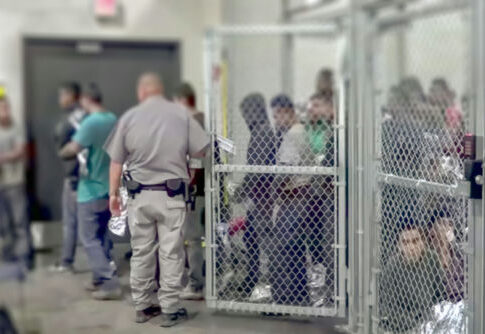
The detention system is an even broader focus. Mexican officials, backed by NGOs and family attorneys, have catalogued at least 14 Mexican nationals who have died in ICE custody, often amid allegations of poor drinking water, delayed medical care, and punitive conditions. While individual death reports typically stress natural causes or pre‑existing health problems, Mexico’s foreign ministry has signaled that it will bring evidence of systemic neglect and rights violations to both U.S. courts and international bodies such as the Inter-American Commission on Human Rights. In that arena, the legal target is not a single officer’s momentary decision but a pattern of institutional practices that, they argue, predictably lead to avoidable fatalities.
Sovereignty, Self-Defense, and the Limits of Foreign Legal Pressure
From a legal perspective, Sheinbaum’s strategy tests how far a foreign government can push accountability for U.S. federal agents. ICE officers operate under U.S. statutes and constitutional doctrines that grant significant protection when they claim self-defense or act pursuant to authorized enforcement operations. Historically, criminal charges against immigration agents following fatal incidents have been exceedingly rare, especially in the absence of definitive video evidence contradicting their accounts. In prior cases involving deaths during raids or in custody, internal reviews and civil suits have more often produced policy tweaks or settlements than criminal convictions.
Mexico faces at least three structural hurdles. First, jurisdiction: U.S. federal courts and investigators control both criminal and most civil processes against ICE personnel and contractors. Mexican officials can file complaints, support civil suits, and lobby for congressional oversight, but they cannot directly compel prosecutions. Second, evidentiary control: DHS and ICE own most of the critical records—body‑camera footage, dash‑camera video, internal incident reports—and can resist or slow public release absent court orders or legislative pressure. Third, the political climate: after the Trump administration’s return and renewed emphasis on immigration crackdowns, federal agencies have been given wide latitude to conduct aggressive interior enforcement, including roving patrols and multi‑city raids that courts have been reluctant to restrain.
In that environment, foreign complaints risk being seen as political theater rather than legal threat. Yet Mexico has levers beyond the courtroom. By elevating these deaths to the level of bilateral dispute and pursuing thematic hearings in international human rights fora, Sheinbaum is attempting to reshape the reputational and diplomatic costs of continued fatalities. Even if prosecutions are rare, public scrutiny can force agencies to tighten use‑of‑force policies, improve detention conditions, and adopt greater transparency around lethal incidents.
The Human Toll and Interior Enforcement’s Broader Consequences
The stakes are not purely legal. Interior immigration enforcement has expanded dramatically in the past decade, with operations moving from border regions into workplaces, neighborhoods, and transit hubs deep inside the country. Research on Latinx communities under intensified enforcement shows that raids, arrests, and constant threat of detention carry significant psychological consequences for children and families, including anxiety, depression, and long‑term distrust of institutions. For Mexican nationals living in the United States—many with mixed‑status families and deep roots in local communities—each high‑profile death in an ICE encounter reinforces a perception that they are targets, not residents.
Mexico’s complaints also intersect with its own enforcement posture. The country has tightened controls at its southern border and cooperated with U.S. policies such as “Remain in Mexico,” which forced asylum seekers to wait in danger on the Mexican side while their claims were processed. That cooperation has often come at a political cost domestically, where critics argue Mexico is serving as an extension of U.S. enforcement. By aggressively challenging deaths in ICE custody and operations, Sheinbaum is signaling a recalibration: Mexico may still help manage migration flows, but it will not silently absorb the consequences of lethal U.S. practices against its citizens.
Where the Dispute Is Likely to Go Next
The immediate future of Mexico’s legal offensive will hinge on evidence—especially video and forensic material—from cases like Salgado’s and García’s. If DHS‑OIG and FBI investigations produce findings that undermine ICE’s accounts, Mexico’s position that these were unlawful or negligent deaths will gain traction in both U.S. courts and international forums. If, as in prior incidents, internal reviews largely validate self-defense or procedural compliance, Mexico may find that its most potent tools are diplomatic, not judicial.
Regardless of specific case outcomes, the accumulated record of deaths in ICE operations and custody has already changed the conversation. A foreign government is now openly threatening litigation over U.S. law‑enforcement behavior on American soil; communities in Houston, Los Angeles, and beyond are demanding transparency and independent investigations; and the line between domestic immigration policy and international human rights dispute has blurred. Whether one sees these deaths as tragic byproducts of necessary enforcement or as evidence of systemic abuse, the legal and political terrain around ICE’s use of force is no longer purely an internal matter for the United States. Mexico has forced it into the realm of contested sovereignty and shared responsibility.
Mexico seeks prosecutions over migrant deaths in the US
Mexico will seek state and federal prosecutions in the United States over the deaths of Mexican migrants during ICE operations, following the fatal shooting of a Mexican man in Houston.
President Claudia Sheinbaum said… pic.twitter.com/IQHbfQQ76G
— Dean (@1778australian) July 10, 2026
This Is Ultimately About Accountability, Not Just Immigration Policy
At bottom, the clash between Sheinbaum’s government and ICE is not about whether nations can control their borders; both Mexico and the United States have robust enforcement regimes and significant migrant detention systems of their own. It is about the rules that govern lethal encounters and custodial deaths, and who gets to enforce those rules when the victims are foreign nationals. For Mexican families who have lost relatives in raids, shootings, or detention cells, the distinction between “lawful self-defense” and “unlawful killing” feels abstract compared to the reality of a father or son who left for work and never came home.
The law will eventually sort some of these cases into categories—justified shootings, tragic accidents, negligent failures. But the consistency of Mexico’s new posture suggests a broader judgment: that current U.S. immigration enforcement practices produce too many dead bodies and too few consequences. As long as crucial evidence remains shielded, that judgment will be difficult to decisively prove or disprove. It will, however, continue to shape the way millions of Mexicans view U.S. authorities, and the way their government chooses to confront its powerful neighbor when those authorities pull the trigger.
Sources:
redstate.com, abc7.com, click2houston.com, washingtonpost.com, instagram.com, x.com, wkyc.com, facebook.com, dailynews.com, khou.com, houstonpublicmedia.org, youtube.com, nbcnews.com, detentionwatchnetwork.org