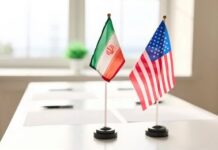

The choreography of Ali al-Zaidi’s first visit to the White House makes one thing unmistakable: Washington is betting that Iraq’s youngest prime minister in history can both recalibrate U.S.–Iraq ties around economics and take on the most stubborn security problem in the country—Iran‑aligned militias operating outside state control.
Key Points
- Ali al-Zaidi, a 41-year-old businessman with no prior political experience, became Iraq’s prime minister in 2026 with decisive U.S. backing, including Trump’s intervention against a more Iran-aligned candidate.
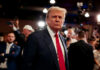
- Trump welcomed al-Zaidi to the White House as a “great leader” and pledged full support, tying U.S.–Iraq relations to progress on disarming Iranian-backed militias and curbing Tehran’s influence.
- Zaidi and U.S. envoy Tom Barrack issued a joint vision for “complete disarmament and disbandment” of all armed groups outside state control, aligning with long-standing U.S. conditions in defense funding and sanctions policy.
- Baghdad has set a September 30 deadline for pro-Iran factions to surrender their weapons, coinciding with the planned end of the U.S.-led coalition’s mission in Iraq, but powerful militias have signaled they will only disarm if U.S. troops leave and their political leverage is preserved.
- History is unforgiving: every previous disarmament pledge since 2006 has produced partial, reversible steps at best, making al-Zaidi’s campaign less a clean break than the latest—and most U.S.-leveraged—round in a long struggle to bring guns under government authority.
From Unknown Banker to U.S.-Backed Prime Minister
Ali al-Zaidi’s rise to the premiership is inseparable from the U.S.–Iran contest over Iraq’s political center of gravity. A wealthy banker and media owner, al-Zaidi was nominated after months of deadlock by the Shia Coordination Framework, itself a coalition with deep links to Iran-aligned factions. Yet his selection only stuck after Washington vetoed the bid of former prime minister Nouri al-Maliki, a figure seen in U.S. circles as too close to Tehran.
Al-Zaidi’s profile is striking. At 41, he is Iraq’s youngest prime minister ever, with no prior experience in government or foreign policy. His background in Al-Janoob Islamic Bank and Dijlah TV marks him as part of Iraq’s business elite—an outsider to party machines but hardly disconnected from the patronage networks that shape economic life. In early 2026, President Trump called al-Zaidi, congratulated him on his nomination, and invited him to Washington, signaling not just acceptance but active endorsement of the new leader.
That phone call and invitation were not symbolic niceties. They were the culmination of what one Atlantic Council analysis described as a “dramatic intervention” by Trump to block Maliki and clear the way for Zaidi, on the premise that a new government would be more amenable to U.S. pressure on militias. Washington’s message was simple: seat a prime minister we can work with, and in return the U.S. will offer partnership, investment, and political cover—if he tackles the armed groups undermining Iraqi state sovereignty.
The Oval Office Meeting: Chemistry, Oil, and Conditions
By the time al-Zaidi walked into the Oval Office, Trump’s narrative about him was fully formed. The president spoke of “tremendous chemistry” with the Iraqi leader, emphasizing that both were wealthy businessmen who had arrived at the pinnacle of government without prior political careers. He described al-Zaidi as “a great leader in the Middle East” whose influence would extend “beyond Iraq” and framed his April rise as “the beginning of a tremendous new chapter” of prosperity and stability between the two nations.
This effusive welcome was paired with hard strategic expectations. U.S. officials briefed that Washington would make “informed” decisions on future support based on Iraq’s efforts to disarm Iranian-backed militias. In earlier public statements, Trump had already congratulated Zaidi for seeking “a new government free from terrorism,” highlighting a “brighter future for Iraq” as the shared goal.
Economic leverage runs through the relationship. Trump repeatedly stressed Iraq’s “tremendous potential” in oil and hinted at major energy deals under discussion, with U.S. companies expecting preferred access to projects and contracts. Parallel reporting from Washington policy circles underlines that the U.S. wants both security guarantees—no platform for regional attacks—and commercial openings; from the American perspective, disarmament of militias and favorable business terms are parts of a single negotiation.
The Disarmament Pledge: Ambitious Vision, Difficult Terrain
At the core of the Washington visit is a sweeping commitment: the Iraqi government’s plan to ensure “the complete disarmament and disbandment of all armed groups and formations operating outside the authority and control of the Iraqi state.” That language appears in a joint statement between al-Zaidi and U.S. special envoy Tom Barrack, articulating a shared “aspirational vision” of an Iraq where only official security forces carry weapons.
This pledge does not appear in a vacuum. It echoes U.S. legislation such as the 2026 National Defense Authorization Act, which ties the bulk of Iraq’s Coalition Train and Equip Fund to measurable progress on disarming militias and bringing weapons under state control. It also reflects years of Iraqi political rhetoric about “weapons in the hands of the state,” a phrase that has accompanied every major effort to tame paramilitary factions since the height of civil conflict in the mid-2000s.
What is new is the intensity and structure of external pressure. In the run-up to Zaidi’s visit, Iraqi officials gave pro-Iran armed groups a deadline of September 30 to dissolve or surrender weapons—a date chosen to coincide with the planned end of the U.S.-led coalition’s mission in Iraq. U.S. and Iraqi sources alike describe this as part of a broader push: state control of weapons, integration of select units into formal security institutions, and the conversion of some militia influence into regulated political and economic roles.
Iraq’s Militia Landscape: Power, Politics, and Partial Disarmament
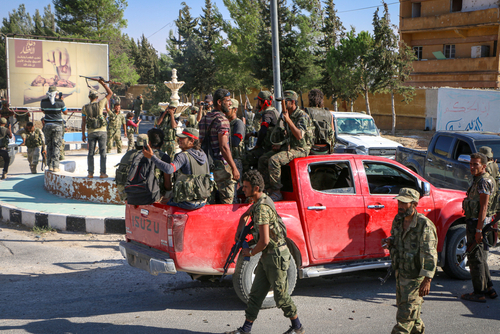
To understand what Zaidi is promising, one has to see the landscape he is trying to reshape. Iran-aligned militias in Iraq are not marginal armed bands; they are entrenched actors embedded in the Popular Mobilization Forces (PMF), parliament, ministries, and provincial governments. Groups such as Asa’ib Ahl al-Haq, Kataib Imam Ali, and others have fought ISIS, run business empires, and built patronage networks that blur the line between state and non-state.
Under sustained U.S. pressure, and with Iraqi judicial activism, a number of factions have signaled willingness to place their weapons under state authority. Supreme Judicial Council chief Faiq Zidan has publicly named at least four groups that have committed to confining arms to government hands. One of the most influential Iran-backed factions, Asa’ib Ahl al-Haq, announced plans to start handing weapons to the state and disengage from some PMF structures, following similar moves by other groups.
These steps are not trivial. Analysts describe them as the “most significant” developments yet in attempts to dismantle Iran’s proxy architecture in Iraq. Yet they remain partial and reversible. Hardline militias such as Kataib Hezbollah have repeatedly rejected calls to disarm, linking any move to the complete withdrawal of U.S. forces and treating disarmament as a concession to an “occupying” presence rather than a domestic governance reform. Mixed signals—public gestures of compliance paired with private conditions and ultimatums—are endemic to this process.
Historical Pattern: Why “Complete Disarmament” Has Never Happened
Zaidi and Trump’s joint rhetoric about “complete” disarmament runs against the grain of two decades of Iraqi experience. Since around 2006, formal pledges to integrate or disarm militias have surfaced every two to three years, often amid international pressure or domestic crises, but none has produced irreversible dismantling of Iran-backed factions. Instead, the pattern is strikingly consistent.
We see cycles of partial integration—units folded into the army or police on paper, with loyalty still owed to movement leaders rather than the state. We see selective disarmament, where smaller or less entrenched groups hand over some weapons, while core hardline actors preserve their arsenals and command chains. And we see symbolic deadlines, like the current September 30 marker, which concentrate attention and bargaining but are frequently extended, diluted, or met only in part.
Structural factors explain this resilience. Many militias have formal political wings sitting in parliament, control ministerial portfolios, and operate quasi-state economic entities. Previous governments have tried to placate them with institutional benefits, from senior appointments to government-owned companies run under PMF umbrellas. In that environment, “disarmament” is less about removing armed power than about reshaping its form and visibility.
U.S. Strategy and Iran’s Stakes
The stakes of Zaidi’s disarmament effort are regional as much as national. For the United States, curbing Iranian-backed militias in Iraq serves three objectives: protecting American personnel and assets, reducing threats to Gulf oil routes and regional partners, and limiting Iran’s ability to project power westward through what Tehran brands the “Axis of Resistance.”
Washington has reinforced pressure through sanctions on militia leaders and allied officials, tying economic pain to continued support for Iranian agendas. It has conditioned military assistance on security sector reform and repeatedly warned that failure to rein in armed groups could trigger broader economic or diplomatic consequences. Trump’s language at the White House—casting Zaidi’s success as pivotal to a “brighter future” and to a relationship of “Prosperity, Stability, and Success”—sits atop this more granular machinery of leverage.
For Iran and its IRGC-linked networks, the calculation is inverse. Maintaining capable, ideologically loyal militias inside Iraq preserves strategic depth, deters adversaries, and creates options to pressure U.S. forces and regional rivals. Commentators close to Tehran frame current disarmament initiatives as “dangerous pushes” aimed at dismantling resistance groups that they see as legitimate defenders against foreign occupation. From that vantage point, Zaidi’s joint statement with Barrack is not a technocratic reform document; it is a front in a larger geopolitical contest.
Can Ali al-Zaidi Change the Trajectory?
The core question is not whether Zaidi and Trump want militias disarmed. They clearly do, for overlapping but not identical reasons. The question is whether Zaidi, as a political novice atop an entrenched system, has the capacity to convert joint statements and deadlines into lasting institutional change.
On the one hand, Zaidi has unusual advantages. He took office with explicit U.S. endorsement, has early wins in securing at least partial commitments from several factions to place weapons under state control, and can leverage international appetite for energy and infrastructure investment to sweeten cooperation. His government has already moved a portion of ministerial posts through parliament, laying the groundwork for a cabinet that could back reforms, even if key security portfolios remain contested.
On the other hand, the constraints are formidable. Al-Zaidi governs in a system designed to preserve elite bargains, not disrupt them; the same Coordination Framework that nominated him also shelters militias whose leaders expect continued spoils. Some hardline groups have drawn a clear red line: no disarmament without U.S. withdrawal, and no surrender of independent command structures without commensurate political guarantees. The historical record of previous disarmament drives—partial, reversible, heavily mediated through integration formulas—offers a sobering baseline.
Viewed against that background, Zaidi’s visit to the White House looks less like a decisive turning point and more like the opening gambit of a longer negotiation. Trump’s public embrace and the joint disarmament language raise expectations and international visibility; they also lock Zaidi into a trajectory where failure will be highly visible. The most realistic outcome in the near term is not “complete disarmament,” but a layered settlement: some militias surrender heavy weapons or accept tighter state oversight, others rebrand and embed more deeply in political institutions, and the hardest core maintains enough capability to matter.
What to Watch as the Deadline Approaches
For observers trying to gauge whether this round of disarmament promises marks a break with the past, several indicators bear watching. First, whether Iraq’s September 30 deadline is treated as binding or negotiable—extended, qualified, or reinterpreted when confronted with hardline resistance. Second, how integration is structured: do newly “state-controlled” units answer genuinely to national chains of command, or do informal loyalties still govern deployments and decisions?
Third, the interplay with U.S. troop posture. If Washington completes its planned military drawdown while militias retain substantial assets, their incentive to disarm may diminish, especially for factions that framed their arms as tools against foreign presence. Conversely, a credible path to economic partnership—energy deals, infrastructure projects, and sanctions relief—could consolidate support for Zaidi’s agenda among those willing to trade some armed autonomy for guaranteed influence and revenue.
Ali al-Zaidi’s debut on the global stage is therefore both a symbol and a test. It symbolizes Iraq’s recurring desire to reclaim monopoly on force and reorient its U.S. relationship around investment rather than occupation. It tests whether a U.S.-backed, business-minded prime minister can overcome the structural realities that have defeated every previous attempt to truly disarm Iran-aligned militias. The evidence so far suggests that the struggle will be incremental and contested—but the stakes, for Iraq’s sovereignty and for the balance of power between Washington and Tehran, could hardly be higher.
Sources:
youtube.com, gulfif.org, en.wikipedia.org, jpost.com, apnews.com, atlanticcouncil.org, longwarjournal.org, aljazeera.com, thenationalnews.com, english.aawsat.com, nytimes.com, fdd.org, ynetnews.com, rudaw.net, washingtoninstitute.org, timesofisrael.com, inss.org.il, americansecurityproject.org, en.abna24.com, reuters.com, cfr.org