
Iran’s latest strikes on Bahrain and Kuwait show how fast Tehran is willing to risk wider war while it tries to bully the West back to the table.
Quick Take
- Iran’s Islamic Revolutionary Guard Corps said it launched drone and missile attacks on Bahrain and Kuwait after new United States strikes.
- Kuwait said its air defenses intercepted incoming Iranian drones and missiles, with no reports of injuries or damage.
- Bahrain said a residential building near the international airport was damaged, not the Fifth Fleet headquarters.
- Iran warned that talks could face a “complete halt” if the United States keeps attacking.
Iran Fires Again as Talks Hang by a Thread
Iran again targeted Bahrain and Kuwait with drone and missile strikes after fresh United States airstrikes hit Iranian sites, according to reporting from the region. Iran’s paramilitary Islamic Revolutionary Guard Corps claimed responsibility and warned that talks could stop completely if Washington keeps up its attacks.[2][3] The message was simple: pressure the United States, shake Gulf security, and force a new round of fear across the region.
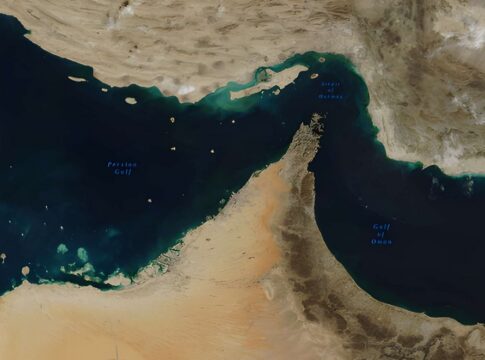
That threat matters because these strikes did not land in a vacuum. The attacks came as the region was already on edge over the Strait of Hormuz and a fragile ceasefire effort. Reports said a U.S.-run maritime body had moved to expand traffic routes near Oman, which Tehran sees as a direct challenge to its control over the waterway.[3][4] For Gulf states, that means more risk, not less.
Kuwait Says Its Air Defenses Stood Firm
Kuwait’s military said its air defenses intercepted Iranian drones and two ballistic missiles, and officials reported no injuries or material damage.[4][7] The country said the attacks came just after the United States struck Iranian targets. That matters because it cuts against Tehran’s claim that it scored a clean hit on major U.S. military sites. In this case, the defensive systems appear to have done their job.
United States Central Command also said Iranian attacks on American forces failed and that no U.S. personnel or equipment were harmed in the Kuwait-linked drone wave.[13] That direct denial leaves Iran’s boast unproven for now. It also shows a familiar pattern in this conflict: Iran makes a loud claim, then the United States and allies say interception worked and the damage was limited or nonexistent.[13]
Bahrain Reports Limited Damage, Not a Major Hit
Bahrain said the Iranian strike damaged a residential building near the international airport, and no one was killed.[2][4] That is far different from Iran’s claim that it hit the Fifth Fleet headquarters in Mina Salman. United States Central Command flatly called that claim false and said the strikes were intercepted.[13] The gap between the two versions is large, but the available reporting supports the Bahraini and American account.
Iran launched missiles and drones on US military sites in Kuwait and Bahrain early on Sunday, shortly after President Donald Trump threatened to wipe out the Iranian leadership if they did not stick to the interim agreement to end their war.
Israel said on Sunday it had struck… pic.twitter.com/3GSvtVCpzk
— Rita Rosenfeld (@rheytah) June 29, 2026
President Donald Trump said Iran violated the ceasefire and warned that the United States could be forced to finish the job if the attacks continue.[3][4] Bahrain’s foreign ministry also condemned the strikes as a dangerous escalation and described them as a deliberate pattern of aggression.[4] For readers who care about sovereignty, border security, and strong deterrence, that is the real warning sign. Iran is not acting like a state seeking peace. It is acting like a regime trying to keep the region on fire.
The Bigger Fight Is Over Control and Credibility
The wider dispute is about more than one barrage of missiles and drones. It is about who controls the story, who controls the sea lanes, and who gets to set the terms of peace. Iran is trying to present its attacks as retaliation. The United States and Gulf partners are presenting them as violations of sovereignty and ceasefire discipline.[2][4][13] Those are not small differences. They shape whether other powers see Iran as restrained or reckless.
For now, the strongest evidence points to a limited tactical impact from the attacks on Bahrain and Kuwait. Kuwaiti and Bahraini officials reported interceptions or minor damage, while United States Central Command rejected Iran’s claim of a successful strike on the Fifth Fleet.[2][4][13] That does not make the danger small. It shows the opposite. A regime willing to launch missiles at U.S.-linked targets, then threaten to stop talks, is signaling that it wants leverage through fear, not peace through restraint.
Sources:
[2] Web – Iran’s Revolutionary Guards say they hit US targets in Kuwait, Bahrain
[3] Web – Iran Claims to Have Hit 18 U.S. Military Facilities in Kuwait and …
[4] YouTube – Iran launches attacks on US military sites in Kuwait and …
[7] Web – 2026 Iran war – Wikipedia
[13] Web – IRGC targets Kuwait, Bahrain as US and Iran trade more strikes …
Iran lies about everything. Remember the sunk the Uss Lincoln carrier? They love their propaganda.
Iran is coming apart. The rich are leaving. There is a run on banks. The IRGC is calling the shots, making false claims. There is no proof the grandson is alive. Give them a week, and we’ll get a call saying they gave up.
How long do we have to keep hearing this? Trump is losing credibility by continue to give these guys a stage. If you have to do an Iraq then do it. But don’t let these guys keep the world hostage.
I agree, I’m a Vietnam vet and have seen personally what happens when politicians in any conflict, either side or both, continue to force the Diplomatic agenda instead of the warfare side and that NEVER WORKS! I’m also a big supporter of the POTUS but in this case I have to demand he choose a side, get out and talk till the enemy gets their way or finish it the total warfare way! Talk all you want AFTER the fighting is over and we have won a complete victory, but remember the Gulf war triumph or WWII ending and that’s the way we need to be or risk November, and that is a warning!