
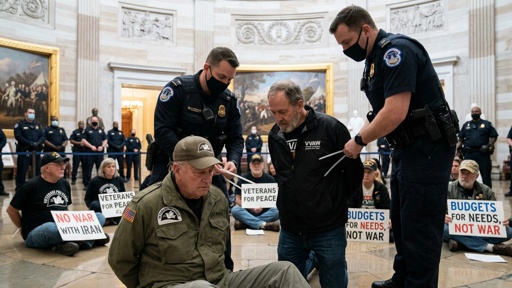
US military veterans, who once defended America with honor, now face zip-tie arrests inside the Capitol for protesting endless war funding that drains our nation’s resources.
Protest Unfolds in Heart of Congress
On April 20, 2026, approximately 62 US military veterans and family members gathered in the Cannon House Office Building rotunda in Washington DC. Many wore fatigues, some appeared disabled, staging a civil disobedience action against the US-Israeli war on Iran. They conducted a solemn flag-folding ceremony to honor 13 fallen American troops. Protesters held red tulips symbolizing Iranian lives lost to US strikes and unfurled banners reading “End the War on Iran” and “We Can’t Afford Another War.”
Veterans Chant Demands, Confront Leadership
Participants chanted calls to defund the war and stood at attention during the ceremony. They directly confronted House Speaker Mike Johnson, urging him to accept their folded flag as a pledge to halt funding. Organized by About Face: Veterans Against the War, alongside Veterans For Peace, Common Defense, and Military Families Speak Out, the action targeted Congress as the key approver of war expenditures. This veteran-led effort carried unique weight, rooted in their service experiences from prior conflicts.
Capitol Police Enforce Dispersal, Arrests Follow
Capitol Police issued a dispersal order, which protesters refused, leading to zip-tie arrests of all 62 individuals. Videos captured detainees, including visibly disabled veterans, being led away. No immediate details emerged on charges or releases as of April 21 reporting. The event occurred amid a fragile ceasefire deadline in the war initiated February 28 under President Trump and Israeli Prime Minister Netanyahu, with recent US strikes escalating tensions.
Roots in Broader Dissent and War Costs
The protest reflects longstanding veteran anti-war activism, similar to Iraq War-era actions by figures like Mike Prysner. Prysner, an Iraq veteran and speaker, described the Iran conflict as “deeply unpopular” and an “administration crisis.” Banners emphasized economic strain, resonating with Americans weary of overspending and fiscal mismanagement. This internal military rift challenges the administration’s alliance with Israel, deepening national divides over policy accountability and endless foreign entanglements.
Implications for Policy and Military Community
Short-term, the arrests pressure Congress on funding votes during high-stakes ceasefire talks. Long-term, growing dissent from honored veterans could impact recruitment, policy debates, and public support for the conflict. Affected families face legal and financial burdens, while the military community grapples with division. Sources confirm core facts across eyewitness footage, though arrest counts vary slightly from 60 to 62, with limited official statements available.