
When two of rock’s most enduring figures publicly disagree about whether a concert stage is an appropriate place for political speech, the argument cuts to something fundamental about what popular music is actually for — and who, in the end, pays the price when an artist forgets that the audience came to feel something, not to be instructed.
At a Glance
- Mick Jagger has explicitly distanced himself from Bruce Springsteen’s approach, saying he doesn’t want Rolling Stones concerts to sound like lectures — a direct contrast to Springsteen’s sustained anti-Trump commentary on his 2026 Land of Hope and Dreams tour.
- At Nationals Park on May 27, 2026, Springsteen called the sitting president “reckless, racist, incompetent, and treasonous” and urged the crowd toward “aggressive, peaceful action to defend our country’s ideals.”
- Springsteen framed the entire tour as “both a celebration and a defense of America” — making political commentary not an aside but a structural feature of the show.
- Jagger’s position is not apolitical silence: the Rolling Stones’ 2026 album Foreign Tongues carries explicit political messages about America, and Jagger has made pointed concert remarks himself — he simply prefers a lighter touch over sustained moralizing.
- The dispute reflects a genuine, unresolved tension in rock’s relationship with its audience: the performer as prophet versus the performer as entertainer, and whether those roles can coexist.
What Springsteen Actually Said — and Did
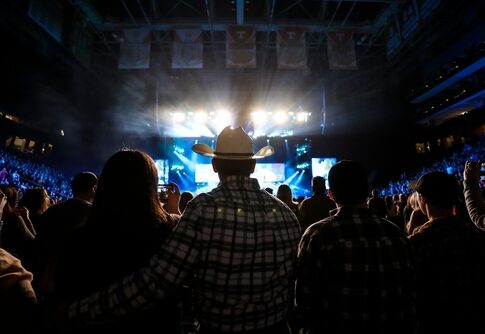
The May 27, 2026, concert at Nationals Park was not a show that happened to include a few political remarks. It was, by Springsteen’s own framing, a mission. He opened by describing the Land of Hope and Dreams tour as “both a celebration and a defense of America” — language that signals intent before a single chord is struck. From there, the evening moved through extended spoken passages that would be unusual even by the standards of an artist long known for between-song monologues.
The most arresting moment came during “Chimes of Freedom,” when Springsteen addressed the audience directly: “We have a president who says he wishes nothing but ill upon those who he disagrees with. But that’s not the country. That’s not the country I want to live in.” He invoked civil rights leader John Lewis’s call to “go out and get in some good trouble,” cited the story of a woman named Renee Goodchild as a moral touchstone, and explicitly acknowledged the emotional state of his audience — “If you’re feeling helpless, if you’re feeling hopeless, if you’re feeling betrayed, if you’re feeling frustrated, if you’re feeling angry, I understand.” Earlier in the show, he had described the president as a “reckless, racist, incompetent, treasonous president” leading a “circle of fools.” The concert’s political content was not incidental. It was the architecture.
Jagger’s Counterpoint — and What It Actually Means
Mick Jagger’s response, offered in an interview that circulated widely, was characteristically oblique but unmistakable in its target: he doesn’t want Rolling Stones concerts to sound like Springsteen’s anti-Trump shows, and he doesn’t want to lecture. The word “lecture” is doing heavy lifting there. It implies a relationship between performer and audience that Jagger finds artistically — and perhaps commercially — untenable: the artist as moral authority, the audience as congregation awaiting instruction.
The irony is that Jagger is not making a case for political silence. The Rolling Stones’ forthcoming album Foreign Tongues carries explicit political commentary about America, and Jagger has acknowledged as much, noting that “America is not the same place as it was.” During a 2025 New Orleans concert, he took a pointed verbal jab at Louisiana’s conservative governor. His objection is not to political thought expressed through music — it’s to the sustained, sermonic delivery that transforms a rock concert into something closer to a campaign rally or, as one sardonic observer put it, a DNC telethon. The distinction matters: a song that embeds political meaning in metaphor, rhythm, and image operates differently on an audience than a frontman pausing the show to deliver a prepared speech about the sitting president’s moral failings.
The Audience Question Nobody Is Answering Honestly
The fans captured on video outside Nationals Park were enthusiastic — “We love Bruce’s politics,” one said, and another expressed hope for “anti-Trump diatribe tonight.” That enthusiasm is real. But it describes a self-selected audience that has already filtered itself: people who disagree with Springsteen’s politics either stopped buying tickets years ago or sit in uncomfortable silence through the speeches. The question of whether political commentary “engages audiences” is therefore almost impossible to answer cleanly, because the audience present at any given Springsteen show in 2026 is not a random sample of his historical fanbase. It is, increasingly, a congregation that shares his views and came partly to have them affirmed.
This is precisely the dynamic Jagger appears to be navigating around. The Rolling Stones play to enormously diverse crowds across enormously diverse markets — the kind of audience that includes people who voted in every conceivable direction and came to hear “Gimme Shelter,” not a briefing on executive branch malfeasance. Keeping that tent intact requires a different calculation than the one Springsteen is making. Neither choice is inherently wrong; they reflect different theories of what a rock concert is for, and different assessments of what an artist owes his audience versus what he owes his conscience.
A Pattern Larger Than Either Man
Springsteen’s Washington concert was not an isolated moment of political passion — it was one data point in a sustained, industry-wide confrontation between major artists and the Trump administration that has intensified throughout the president’s second term. Springsteen was among the artists who withdrew from the Freedom 250 concerts, the Trump-linked series meant to celebrate America’s 250th anniversary; Taylor Swift, Billie Eilish, and Robert De Niro were among the others. Trump responded by publicly demanding the events be canceled. More than thirty artists have formally objected to Trump’s use of their music at rallies. The cultural war between the mainstream music industry and the current administration is, at this point, a structural feature of the political landscape, not an episodic controversy.
What makes the Jagger-Springsteen divide interesting within that larger pattern is that it is not a dispute between a political artist and an apolitical one. Both men are making political choices. Springsteen’s choice is maximal transparency — put the argument onstage, name the adversary, mobilize the crowd. Jagger’s choice is to embed the politics in the work itself and preserve the concert as a space where the music does the persuading. PBS has documented how artists across genres are responding to Trump’s second term, and the range of approaches is wide. Springsteen represents one pole of that range; Jagger, despite his own sharp political instincts, represents another.
What the Argument Reveals About Rock’s Unresolved Identity
Rock music has always carried a political charge — from protest folk’s direct address to punk’s structural antagonism to arena rock’s complicated relationship with the working class it claimed to represent. But the genre has never fully resolved the tension between the artist as truth-teller and the artist as entertainer, and that tension is exactly what the Springsteen-Jagger disagreement makes visible. Springsteen’s position — that the concert is “both a celebration and a defense of America” — collapses the distinction between art and advocacy deliberately. Jagger’s position preserves it, not out of cowardice but out of a different understanding of where music’s power actually lives.
The evidence suggests both men are acting in good faith according to their own artistic philosophies, and that neither is obviously wrong. What is clear is that Springsteen’s approach carries real costs alongside its satisfactions: a portion of his historical audience has been alienated, the satirical mockery of his fanbase as a monolithic liberal demographic has some purchase in observable reality, and the gap between his working-class mythology and his private-jet lifestyle creates a credibility friction that sustained political moralizing only sharpens. Jagger, for his part, risks the opposite problem — appearing to hedge when clarity is demanded. The argument between them is, in miniature, the argument American culture is having with itself about what public figures owe the moment they’re living through, and what they owe the people who paid to spend an evening with them.
Sources:
twitchy.com, thehotelwashington.com, youtube.com, instagram.com, brucespringsteen.net, seattletimes.com, reddit.com, mediaite.com, facebook.com
People go to concerts to enjoy themselves, get away from all the pressures we are under right now. NOT for the entertainers to dump more on their audience.