
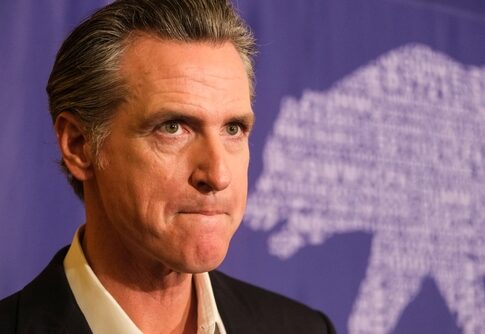
The most consequential fact about the Congressional Review Act resolutions President Trump signed on June 12, 2025, is not that they blocked California’s 2035 zero-emission vehicle mandate — it is that they did so permanently, and in a way that strips every state in the union of the authority to set tailpipe standards more stringent than the federal government’s, for as long as the resolutions stand.
At a Glance
- Trump signed three CRA resolutions on June 12, 2025, revoking Biden-era EPA waivers that allowed California to mandate 100% zero-emission vehicle sales by 2035 and impose strict standards on heavy-duty trucks.
- The resolutions do not merely pause California’s rules — they permanently bar California and the 17 states that had adopted its standards from setting stricter tailpipe emissions limits than the federal government.
- California, backed by 10 other state attorneys general, immediately filed suit, setting up a legal confrontation that will test the limits of both the Congressional Review Act and the Clean Air Act’s waiver framework.
- The dispute is the latest iteration of a decades-long federal-state tug of war over environmental regulation, one with structural financial incentives on both sides that go well beyond clean air.
- Trump’s core claim — that the mandate constituted an economic “disaster” — lacks the supporting economic data that would make it decisive; California’s environmental case is grounded in statute but faces its own implementation challenges.
What Was Actually Signed, and What It Does
The three resolutions — H.J. Res. 88, H.J. Res. 87, and H.J. Res. 89 — each targeted a distinct regulatory instrument. The first revoked the waiver enabling California’s Advanced Clean Cars II rule, which the California Air Resources Board had designed to reach 35% zero-emission vehicle sales by 2026, 68% by 2030, and 100% by 2035, including plug-in hybrids. The second revoked the waiver covering medium- and heavy-duty truck zero-emission mandates. The third addressed California’s low-nitrogen oxide engine standards. Together, they constitute the most sweeping federal rollback of California’s autonomous air-quality authority since Congress embedded that authority in the Clean Air Act more than five decades ago.
The mechanism that makes these resolutions so structurally significant is the Congressional Review Act itself. When Congress invokes the CRA to disapprove a rule, the statute prohibits the relevant agency from issuing a “substantially similar” rule in the future without new congressional authorization. Applied here, that language means the EPA cannot simply re-grant California the same waivers under a future administration without an act of Congress — a much higher bar than the administrative rulemaking that created the waivers in the first place. Whether that prohibition extends to California’s own rulemaking authority under the Clean Air Act’s Section 209 waiver framework is precisely the legal question California’s lawsuit will force the courts to answer.
The Economic Argument: Asserted, Not Demonstrated
Trump’s signing-ceremony framing — that the mandate is “a disaster for this country” and that the resolutions “rescue the U.S. industry from terminating the electric vehicle once and for all” — captures the political logic of the action without supplying its evidentiary foundation. No economic impact study, no employment data, no documented plant closures or revenue declines attributable to the California mandate appear in the record surrounding this signing. The auto industry’s actual posture toward EV mandates has been more ambivalent than the White House framing suggests: manufacturers have simultaneously lobbied against rigid timelines and invested billions in EV platform development, a contradiction that resists the clean narrative of industry rescue.
That evidentiary gap does not make the concern frivolous. Regulatory fragmentation — where California and 17 follow-on states representing roughly a third of the U.S. automotive market effectively impose a standard different from the other two-thirds — does create genuine compliance complexity for manufacturers designing national vehicle lineups. Vermont’s announcement that it would not enforce the new regulations due to logistical challenges gestures at real implementation friction, even if that friction falls short of the “disaster” characterization. The honest accounting is that the economic case for revocation is plausible but unproven; the administration made an assertion where a study would have been persuasive.
California’s Environmental Case: Statutory, Concrete, and Now in Litigation
The counter-position is not merely political posturing. California’s mandate rests on a statutory framework requiring an 85% reduction in anthropogenic emissions below 1990 levels and full carbon neutrality by 2045 — goals codified in state law and referenced in the state’s EPA-filed climate action plan. The Advanced Clean Cars II rule was the primary vehicle for meeting transportation sector targets within that framework, and California’s air quality problems — driven by geography, population density, and vehicle miles traveled — are measurably worse than the national average, which is precisely why Congress gave the state its unique waiver authority in 1970.
Governor Gavin Newsom and Attorney General Rob Bonta framed the revocation as an “assault” on air quality and filed suit alongside 10 other state attorneys general. Their legal theory will likely center on whether the CRA can lawfully be applied to EPA waiver decisions at all — waivers being grants of authority to a state rather than federal rules in the conventional sense — and whether the resolutions violate the Administrative Procedure Act’s procedural requirements. These are live legal questions, not rhetorical ones, and the courts have not yet resolved them.
The Deeper Pattern: Fifty Years of Federal-State Regulatory Conflict
To treat this dispute as a novel confrontation is to misread its history. The federal-state tension over environmental regulation is structural, not episodic. California has held special waiver authority under the Clean Air Act since 1970 precisely because it had already enacted vehicle emissions standards before federal law existed — a grandfather clause that became the template for the cooperative federalism model the Clean Air Act embodies. That model has been stressed repeatedly: the Reagan administration sought to revoke California’s waiver authority in the 1980s; the George W. Bush EPA denied a waiver for greenhouse gas standards in 2008, a denial the Obama administration reversed in 2009; and now the Trump administration has deployed the CRA as a more durable instrument of revocation than the administrative denial Bush used.
Each cycle follows the same structural logic. The federal administration in power gains political capital from constituencies that benefit from uniform, less stringent standards — in this case, fossil fuel producers and segments of the auto industry resistant to accelerated EV timelines. California and its follow-on states secure reputational and investment advantages from green technology leadership. The financial stakes are not incidental to the argument; they are the argument, dressed in the language of federalism and environmental necessity depending on which side is speaking.
What the Legal Battle Will Actually Decide
The litigation California has initiated is not simply about whether the 2035 mandate survives. It will force courts to address a question the CRA’s drafters almost certainly did not contemplate: whether a congressional resolution disapproving an EPA waiver — which is not itself a federal rule but an authorization for a state to exceed federal standards — falls within the CRA’s scope at all. The Government Accountability Office issued an opinion in 2024 concluding that the waivers were indeed subject to CRA review, a conclusion California disputes. If courts side with California on that threshold question, the resolutions fall regardless of their policy merits.
If courts uphold the CRA’s application, the permanence provision becomes the central battleground: can Congress constitutionally strip California of waiver authority in perpetuity through a simple majority resolution, or does that require the kind of explicit statutory amendment that would need to survive a filibuster in the Senate? The answer will determine not just the fate of California’s EV mandate but the future architecture of federal-state environmental authority for a generation.
ONLY IN CALIFORNIA. HOWEVER, THANKS TO TRUMP AND @PeteHegseth THE STRAIT IS OPEN AND OIL IS FLOWING. GAS TODAY WAS $4.99/GAL OR $3.50 EVERY OTHER STATE BUT CALIFORNIA BECAUSE DEMOCRATS CAN'T STOP SPENDING. https://t.co/dNvT985E6D
— Thom Falcon (@realthomfalcon) July 10, 2026
The Stakes for Everyone Who Buys a Car
For consumers, the immediate practical effect of the revocation is that no state can now mandate that the next vehicle they purchase be electric or zero-emission. Whether that outcome reflects a genuine expansion of consumer choice or a foreclosure of the regulatory pressure that drives manufacturers to accelerate EV development depends heavily on one’s theory of how markets respond to mandates. The evidence from the past decade suggests that California’s standards have functioned as a de facto national floor, pulling manufacturer investment toward compliance even in states that did not adopt California’s rules. Removing that floor does not simply restore a pre-existing market equilibrium; it changes the investment calculus for every automaker planning model lineups through the 2030s.
The deeper irony is that the U.S. auto industry’s competitive position in the global EV market — where Chinese manufacturers have achieved scale and cost advantages that American and European producers are still scrambling to match — may be more affected by the long-term regulatory signal these resolutions send than by the immediate compliance burden they relieve. That is a consequence neither side of this dispute has been particularly eager to quantify, which is itself a telling omission.
Sources:
townhall.com, youtube.com, kmbc.com, calmatters.org, apnews.com, reddit.com, sciencedirect.com