
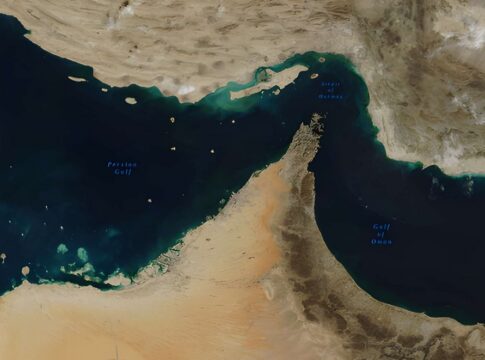
Each new round of U.S. strikes on Iran in and around the Strait of Hormuz is billed as a narrow act of self‑defense, yet together they illustrate a broader reality: Washington is trying to police a vital waterway with airpower and legal language while Tehran contests both the facts and the rules of the game.
At a Glance
- U.S. Central Command frames the June 26, 2026 strikes as direct retaliation for an Iranian drone attack on the cargo ship M/V Ever Lovely and a necessary step to protect commercial shipping.
- President Trump presents these and earlier actions as defensive enforcement of a ceasefire and freedom of navigation, even as Iran and many media outlets describe them as escalatory and in breach of a Memorandum of Understanding (MoU).
- The pattern builds on the 2025 strikes on Iranian nuclear sites and a 2026 naval blockade, showing a consistent U.S. strategy of punitive, “limited” force to shape Iranian behavior rather than formally returning to full‑scale war.
- The core facts of the Ever Lovely attack and the legal status of the ceasefire remain contested: CENTCOM’s account is detailed and specific, while Iran has offered denials and alternative explanations without independent verification.
- Behind the immediate exchanges lies a larger contest over control and narrative in the Strait of Hormuz, a corridor that carries roughly a fifth of globally traded oil and amplifies every missile, drone, and legal argument into a geopolitical event.
Retaliatory Strikes After the Ever Lovely Incident
The June 26, 2026 strikes are best understood not as a standalone episode but as the latest link in a chain of tit‑for‑tat actions centered on the Strait of Hormuz. According to U.S. Central Command’s public release, U.S. forces conducted strikes on Iranian soil “as a powerful response” to an attack the previous day on the Singapore‑flagged cargo ship M/V Ever Lovely as it transited the Strait. CENTCOM specifies that warplanes hit missile and drone storage locations and coastal radar stations in the coastal area of Sirik, describing the target set as the infrastructure Iran uses to threaten commercial shipping. This is consistent with parallel reporting from major outlets, which summarize the struck facilities as radar sites, drone and missile depots, and mine‑laying capabilities around the Strait.
President Trump’s public framing tracks closely with CENTCOM’s language. Shortly before the strikes, he told reporters Iran had fired four drones at ships in the Strait, called the episode a “foolish violation” of the ceasefire agreement, and refused to specify the U.S. response beyond “You’ll find out.” In subsequent remarks he emphasized that Iran retained significant capacity to “still shoot,” using the Ever Lovely incident to argue that earlier U.S. operations had not fully neutralized Iran’s ability to threaten ships. The official narrative is therefore straightforward: Iran fired on commercial shipping in a way that clearly violated a ceasefire; the U.S. responded with strikes narrowly tailored to degrade the means of such attacks.
Iran’s position is much less coherent, but it directly disputes the core accusation. Iranian officials and state media have denied responsibility for some incidents, sometimes attributing damage to “human error” or crossfire and insisting that U.S. forces were “in the wrong place at the wrong time.” They also claim that Washington’s strikes themselves violate the Islamabad Memorandum of Understanding (MoU) that underpins the ceasefire, invoking specific articles—1, 2, and 10—to argue that U.S. military action and the revocation of oil waivers breach agreed rules. What Iran has not produced is independent forensic evidence regarding the drone that hit the Ever Lovely: no detailed analysis of wreckage, no third‑party technical report, no satellite imagery that directly refutes CENTCOM’s attribution to Iranian forces. In evidentiary terms, CENTCOM’s account is specific, documented, and consistent across platforms, while Iran’s counter‑story is largely rhetorical.
Legal Justifications and the Ceasefire’s Elastic Boundaries
Both sides place enormous weight on the ceasefire’s legal architecture—especially the Islamabad MoU—and this is where the dispute turns from missiles to meanings. U.S. officials and sympathetic commentators describe the MoU as “performance‑based”: its benefits, notably limited sanctions relief and an easing of the naval blockade, are contingent on Iranian behavior. In this view, drone and missile attacks on commercial tankers crossing what Washington defines as international waters automatically constitute violations, thereby legitimizing “self‑defense strikes” against the systems used to perpetrate those attacks.
Iranian negotiators and allied analysts take the opposite approach. They interpret specific articles of the MoU as granting regional states, including Iran, substantial authority over traffic in and near the Strait of Hormuz. From that vantage point, U.S.‑recommended shipping routes that hug the Omani side of the Strait, and the persistent presence of U.S. warships enforcing a unilateral blockade, look less like neutral policing and more like encroachment on Iranian rights. Iranian Deputy Foreign Minister Garba Body and Professor Marandi therefore argue that it is Washington—not Tehran—that has been in breach, citing U.S. strikes and waiver revocations as violations of Articles 1, 2, and 10. This is not merely legal pedantry; both sides know that whoever successfully frames the other as treaty‑breaker gains diplomatic leverage with Gulf monarchies, European allies, and global markets.
In practice, the ceasefire has been treated by Washington as flexible. CENTCOM has conducted “self‑defense strikes” on multiple occasions against Iranian targets threatening U.S. destroyers and commercial ships, even while the White House insists the ceasefire remains formally “in effect.” Trump has at times described certain strikes on Iranian ports as “just a love tap,” reinforcing the notion that limited, geographically constrained attacks can coexist with a political ceasefire. That elasticity may be intelligible to U.S. lawyers and strategists, but to Iranian officials and many outside observers, the combination of strikes, blockade measures, and sanctions reversals looks indistinguishable from a continuation of war.
From Nuclear Sites to Naval Blockade: The Escalation Pattern
The Ever Lovely episode sits downstream of two major precedents: the 2025 strikes on Iranian nuclear facilities and the 2026 U.S. naval blockade of Iran. In 2025, Operation Midnight Hammer targeted key nodes in Iran’s nuclear program, including Fordow and Natanz, with Trump formally notifying Congress that the strikes were “necessary to eliminate Iran’s nuclear program” and protect vital U.S. interests. Iranian Foreign Minister Abbas Araghchi publicly acknowledged that nuclear sites suffered severe damage, which supports the claim that U.S. forces significantly degraded the program’s physical infrastructure. Yet the Pentagon’s own intelligence assessments cautioned that the strikes had delayed, not destroyed, Iran’s nuclear capability, undermining Trump’s rhetoric of “complete and total obliteration.” Analysts have repeatedly emphasized that the program was disrupted but not eradicated, a pattern echoed in Trump’s later admission that Iran “can still shoot” at ships.
On April 13, 2026, the U.S. imposed a naval blockade on Iran after the failure of the Islamabad Talks, applying interdiction measures to ships going to and from Iranian ports. Iran immediately claimed that the entry of U.S. military vessels near the Strait of Hormuz breached the ceasefire, while Trump and his commanders framed the blockade as a necessary tool to stop attacks on shipping and force Tehran back to negotiations. Two months later, Trump announced an agreement to end the war and reopen the Strait, and said he had authorized lifting the blockade—only for the military to clarify that enforcement would continue until signatures were exchanged. That episode reinforced both sides’ suspicions: Iran saw promises as unreliable, while Washington saw Iranian actions during “talks” as a test of good faith requiring constant verification and occasional coercion.
Against this backdrop, the June 2026 strikes are not an aberration but an expected move within a strategy that mixes coercive force, flexible ceasefires, and episodic diplomacy. The goal is not occupation or regime change but behavioral modification: degrade specific capabilities, inflict costs for non‑compliance, and maintain enough military pressure to deter escalation while preserving political space for future talks.
Iran’s Retaliation and the Cycle of Controlled Escalation
Iran has responded to U.S. actions with its own pattern of retaliation, calibrated to demonstrate resolve without triggering a full conventional war. Iranian state media and officials have confirmed missile and drone attacks on U.S. bases in Kuwait and Bahrain following some of the U.S. strike waves. In one widely discussed episode, Tehran claimed to have hit 85 U.S. locations across those countries, a figure designed as much for psychological effect as for military impact. Iranian parliamentary leaders have framed such actions as proof that “the era of bullying and extortion is over,” asserting that Iran will not “fold” under U.S. pressure.[CBN transcript summary]
At the same time, Iranian spokespeople sometimes soften their language around specific incidents, attributing the downing of a U.S. Apache helicopter to human error or crossfire rather than deliberate attack. That rhetorical oscillation—bragging about retaliatory barrages while denying hostile intent in particular cases—reflects Iran’s own need to manage escalation. Blaming “errors” allows Tehran to signal capability and willingness to respond without formally admitting to actions that could trigger more severe U.S. or allied reprisals. For Washington, however, such explanations reinforce a perception of Iranian bad faith, confirming Trump’s oft‑repeated line that Iran will “agree on everything and then go have a news conference and say we never even talked about it.”[LiveNOW Zelenskyy transcript]
Domestic Politics, Allies, and the Economics of Hormuz
These military and legal maneuvers play out under significant political and economic constraints. Polling summarized by Brookings Institute analysis suggests roughly 60% of Americans oppose the Iran war, creating steady domestic pressure against open‑ended conflict. That sentiment shapes how far any administration can go: limited, episodic strikes are easier to sell at home than a major campaign, especially when framed in terms of defending commerce rather than toppling a regime. Trump’s own language reflects this balancing act; he vows Iran will “pay the price” and celebrates targeting IRGC assets while insisting he does not foresee a “full‑scale war restarting.”[BREAKING Fox News transcript]
Allied reactions are similarly mixed. NATO Secretary General Jens Stoltenberg has publicly backed U.S. strikes as “absolutely necessary” and highlighted extensive European air support during broader operations like Epic Fury.[LiveNOW NATO transcript] Yet some European governments view aggressive enforcement of the blockade and repeated strike cycles as destabilizing, worrying about energy security, refugee flows, and the precedent of force outside a clear U.N. mandate. Trump’s harsh criticism of Spain’s defense spending and threats to cut trade sharpen those tensions, reminding allies that the Iran war is nested inside a larger argument over burden‑sharing and American leadership.[OVERNIIGHT Fox transcript]
Economically, every incident in the Strait of Hormuz reverberates through global oil markets. The waterway carries around 20% of globally traded oil, and reports from financial analysts describe spikes in futures prices toward $90–$95 per barrel during periods of intense exchange.[MeidasTouch transcript] U.S. efforts to maintain “freedom of navigation” are therefore aimed as much at stabilizing prices and reassuring importers as at punishing Iran. Iran, for its part, understands that the mere threat of disruption in Hormuz can generate leverage, even if it cannot permanently close the strait without provoking overwhelming retaliation. The result is a kind of controlled brinkmanship: both sides test limits, seek narrative advantage, and try to keep the conflict below the threshold at which markets, allies, and domestic opinion force a fundamental course correction.
Where the Evidence Is Clear—and Where It Is Not
On the central factual question—did an Iranian drone attack the M/V Ever Lovely on June 25?—the publicly available evidence tilts decisively toward the U.S. account. CENTCOM has issued a detailed statement identifying the ship, the date, the weapon (a one‑way attack drone), and the targeted Iranian facilities struck in response. Multiple news organizations, including Reuters and CNN, have independently echoed those details based on U.S. official briefings. Iran has denied responsibility and advanced alternative narratives, but has not produced technical or third‑party evidence that would seriously challenge the attribution.
On the legal question—did that attack, and the U.S. response, violate or enforce the MoU ceasefire—the evidence is inherently more contested. U.S. officials cite the MoU and general principles of maritime law to justify self‑defense strikes and sanctions measures. Iranian officials cite specific MoU articles to claim the U.S. presence itself is illegitimate and that Washington has broken the ceasefire by revoking oil waivers and striking ports. Without publication of the full text of the MoU and its interpretive annexes, outside observers can only compare the internal consistency of each side’s argument and the behavior that follows. The pattern thus far suggests both sides are willing to bend the ceasefire’s logic to accommodate limited force when convenient, then invoke its sanctity when seeking to blame the other for escalation.
Finally, on strategic effectiveness, the record is mixed. The 2025 nuclear strikes and subsequent campaigns have clearly damaged Iranian capabilities—from nuclear infrastructure to surveillance, drone storage, and radar networks. Yet Iran has repeatedly rebuilt and adapted, restored missile launchers, and continued to threaten ships and bases. Brookings analysts have argued that this war has “called into question the feasibility of the American way of war,” exposing U.S. bases and surface ships to sustained adversary attack and forcing a rethink of assumptions about sanctuary and coercion. The June 2026 strikes after the Ever Lovely incident continue that story: tactically successful, legally defensible to Washington’s audience, strategically inconclusive.
Sources:
pjmedia.com, npr.org, reuters.com, centcom.mil, cnn.com, bbc.com, en.wikipedia.org, cbsnews.com, vox.com, kurdistan24.net, nypost.com, facebook.com
The U S A has a right to defend it’s self . I can’t believe the people of this country would balk at that. Do they want an other Perl harbor?