
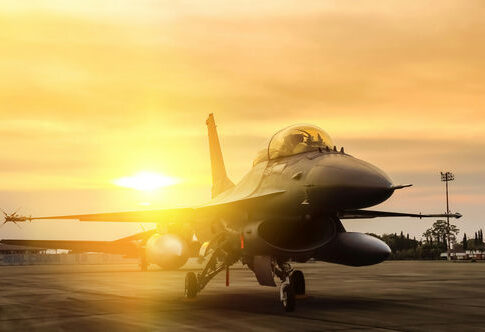
One mid‑tier Soviet fighter sale from a struggling post‑Soviet republic captures the entire logic and many of the moral ambiguities of U.S. non‑proliferation policy after the Cold War: Washington paid Moldova about $40 million for its MiG‑29 fleet to keep the jets out of Iran’s hands, and the Moldovan minister who signed the deal later went to prison for how that sale was done.
Story Overview
- The United States bought 21 MiG‑29s from Moldova in 1997 under the Cooperative Threat Reduction program to deny Iran a modern fighter and potential WMD delivery platform.
- Fourteen of the aircraft were identified by U.S. officials as MiG‑29C variants “wired” for nuclear delivery, a claim Moscow publicly disputed.
- Moldova received roughly $40 million in cash plus humanitarian aid and non‑lethal military equipment, a price later denounced domestically as a massive undervaluation.
- The episode illustrates how post‑Soviet “loose asset” interventions could simultaneously advance U.S. non‑proliferation goals and feed corruption and legal conflict in fragile new states.
From Soviet Legacy to “Loose Asset” Problem
To understand why the Pentagon cared about a small Moldovan fighter fleet, you have to situate the deal in the broader post‑Cold War struggle over Soviet military leftovers. After the USSR’s collapse, newly independent republics inherited aircraft, missiles, nuclear materials, and conventional systems they often could not afford to maintain. Many of these assets were attractive to states under Western sanctions that wanted to leapfrog their own development cycles. The United States responded with the Defense Counterproliferation Initiative in 1993 and, more concretely, the Cooperative Threat Reduction (CTR) program, designed to prevent nuclear, biological, and chemical (NBC) weapons and their delivery systems from leaking into global arms markets.
CTR money funded everything from missile silo destruction in Russia and Ukraine to the famous 1994 purchase of weapons‑grade uranium from Kazakhstan. The logic was straightforward: it was cheaper and safer to buy, secure, or destroy sensitive systems at the source than to deter or defeat them once they had been acquired by “rogue states.” That logic eventually extended beyond strictly nuclear weapons into advanced conventional platforms judged relevant to WMD delivery—precisely the category into which U.S. officials placed the Moldovan MiG‑29Cs.
The MiG‑29 Fleet and Why Iran Wanted It
The MiG‑29 “Fulcrum” was never the pinnacle of Soviet fighter design, but by the 1980s it represented a modern, agile, Mach‑2 front‑line aircraft capable of carrying sophisticated air‑to‑air missiles and, in some versions, configured for nuclear strike missions. Moldova inherited 21 MiG‑29s from the Soviet 86th Guards Fighter Aviation Regiment when it declared independence. By the mid‑1990s, the country lacked the resources to keep them combat‑ready, yet the aircraft had obvious market value. Iran, under Western sanctions and seeking modern airframes to counter U.S. and allied air power in the Gulf, showed interest.
According to reporting at the time, U.S. intelligence learned that Iranian representatives were exploring the purchase of Moldova’s MiG‑29s. Washington’s concern was not just that Tehran would gain a moderately capable fighter; it was that at least some of those aircraft, the MiG‑29C variant, were believed to be wired to deliver nuclear munitions, making them eligible for CTR treatment as potential WMD delivery systems. Given Iran’s suspected pursuit of nuclear capabilities in the 1990s, the risk calculus inside the Pentagon tilted heavily toward denial: keep the planes off the market, even if it meant buying them outright.
The 1997 Deal: Price, Package, and CTR Mechanics
Negotiations began in early 1997. In March, Secretary of State Madeleine Albright certified Moldova as eligible for CTR assistance, alongside several other former Soviet republics. On June 23, the United States and Moldova signed a CTR “umbrella” agreement, authorizing cooperative activities, including acquisitions that would remove sensitive systems from circulation. By October 10, the specific MiG‑29 contract was finalized.
Under that agreement, the United States acquired 21 aircraft: 14 MiG‑29Cs, six MiG‑29As, and one MiG‑29B trainer, along with roughly 500 air‑to‑air missiles and all spare parts and diagnostic equipment at the Moldovan base. The official purchase price was not published, but Moldovan finance minister Valeriu Chitan told reporters that the state budget would gain about $40 million from the deal. Other Moldovan officials speculated that the total package value might be nearer $80 million once in‑kind assistance and equipment were counted, suggesting a mix of cash and goods.
Funding flowed from the CTR program, which explicitly allowed Defense Department money to be used to acquire or destroy systems that could serve as WMD delivery platforms. In Washington, Defense Secretary William Cohen framed the deal as a non‑proliferation success: the aircraft, he said, were capable of carrying nuclear weapons, and the point of buying them was to prevent their sale or diversion to would‑be proliferators, particularly Iran.
Were the MiG‑29Cs Really Nuclear‑Capable?
The claim that 14 MiG‑29Cs in Moldova were “wired” for nuclear delivery is both central to the CTR justification and contested. U.S. sources at the time, including Arms Control Association reports and military publications, described the aircraft as “dual‑role fighters—capable of carrying nuclear weapons.” A Defense Department image caption showed a “nuclear‑capable MiG‑29C” being prepared for shipment to the United States.
Moscow pushed back. Russian Defense Minister Igor Sergeyev publicly called reports of nuclear‑capable Moldovan MiGs a “lie,” disputing the idea that the specific aircraft in question were configured for nuclear munitions. That denial resonated because nuclear wiring is a technical matter: hardpoints, fire‑control systems, and certification protocols can be verified. Yet no open technical audit has been released that definitively settles whether the Moldovan jets had nuclear delivery wiring or merely the design potential to be so equipped.
This ambiguity sits at the heart of subsequent criticism. If the aircraft were not nuclear‑capable in the strict technical sense, using CTR funds—created to manage nuclear and other WMD threats—to buy them could be portrayed as a stretch of the program’s mandate. On the other hand, from a U.S. risk‑management perspective, the distinction between “wired today” and “easily wired tomorrow” may have been less important than the possibility that Iran would possess a proven Soviet platform designed with nuclear roles in mind.
What the United States Did With the Jets
Once purchased, the MiGs were disassembled and transported to Wright‑Patterson Air Force Base in Ohio. For the U.S. military, the value of the aircraft was not in adding them to operational squadrons—maintaining a handful of foreign fighters is costly and tactically marginal—but in exploiting them for testing, training, and intelligence. American and allied pilots flew and studied the jets to better understand Soviet design philosophy, performance envelopes, radar signatures, and missile employment tactics.
This kind of exploitation fits a longstanding pattern. The United States has consistently sought to fly and dissect foreign aircraft to refine its own air combat tactics; access to an entire fleet, complete with spares and missiles, was a significant windfall. But the primary strategic achievement remained denial: Iran did not get the planes, and a potential upgrade to its air force, with all the signaling that would have implied in the Gulf, never materialized.
Popular narratives have embellished this phase of the story. A YouTube video, for example, claims the jets were stored “unused in a basement in Ohio,” presented as “textbook covert tradecraft.” That description carries rhetorical appeal but is unsupported by documentary evidence, witness testimony, or official records; we know they went to Wright‑Patterson, were reassembled, and used for evaluation and training, which is entirely consistent with past U.S. practice.
Moldovan Politics: Legality, Price, and the Pasat Case
If the American side of the story is about non‑proliferation and intelligence, the Moldovan side is about legality, valuation, and domestic accountability. Even in 1997, the sale triggered political backlash. Parliamentary deputy Nicolae Andronic labeled the deal “dubious,” accusing the government of breaking the law by failing to obtain parliamentary approval for the transfer of defense ministry property. He argued that privatization law barred such sales without legislative consent.
Other officials contested that specific legal claim, noting that the relevant privatization statute did not enter into force until after the MiG contract had been signed. That kind of procedural argument—timing, scope, retroactivity—is common in transitional polities where legal frameworks are evolving faster than practice. But the episode planted a seed: many Moldovan elites and citizens felt that strategic assets had been sold too cheaply and without proper oversight.
That sentiment hardened over time. In 2005, former defense minister Valeriu Pasat, who had signed the MiG sale, was arrested and later sentenced to prison on charges that he defrauded the Moldovan state budget by roughly $55 million through the transaction. The accusation, reported by outlets such as the New York Times and Moldovan media, was that selling the jets to the United States at the agreed price had deprived the country of fair value.
Fraud or Bargain? The Valuation Problem
Pasat’s conviction is frequently invoked as proof that the MiG‑29 deal was corrupt. What it actually demonstrates is more specific: Moldovan prosecutors and courts concluded that, relative to some benchmark, the sale price and terms harmed the state financially. Yet the public record leaves important questions unresolved.
First, we have a reported cash inflow of about $40 million, with additional humanitarian aid and non‑lethal military equipment acknowledged at the time. Second, we have a fraud figure of roughly $55 million—implying either that prosecutors believed the jets were worth far more than the package Moldova received, or that some portion of agreed funds never reached the state budget. Without access to the court’s evidentiary files or independent defense‑economics valuations of 21 used MiG‑29s in 1997, it is impossible to say with confidence which interpretation is correct.
Third, there is no evidence in the sources that the United States underpaid relative to what it agreed to transfer. Arms control organizations and defense outlets that covered the transaction treated it as a standard CTR operation, not a covert attempt to exploit Moldova’s weakness. If corruption occurred, it may have taken the form of internal diversion—domestic actors siphoning off value—or political judgments that the leadership traded strategic assets for short‑term cash at the expense of long‑term sovereignty.
The key point for readers is this: Pasat’s imprisonment is a genuine fact, and it reflects real domestic anger over the deal’s terms. It does not, by itself, refute the U.S. non‑proliferation rationale or demonstrate American bad faith; it shows how asymmetric bargaining power and weak institutions can turn a strategic transaction into a political scandal for the smaller state.
Disputed Narratives and Lessons for Non‑Proliferation Policy
Because the MiG‑29 sale sits at the intersection of Pentagon non‑proliferation strategy and Moldovan domestic politics, it has become a magnet for clashing narratives. Arms control groups and U.S. defense sources tend to emphasize the operation’s success: a potential proliferant was denied advanced aircraft; CTR mechanisms were creatively applied to an emergent risk; and valuable intelligence on Soviet fighter design was gained.
Critics, both inside Moldova and in broader commentary, stress different points. They highlight Sergeyev’s denial of nuclear capability to question whether CTR funds were appropriately used. They underscore the lack of parliamentary approval and Pasat’s eventual conviction to argue that the deal was legally and ethically flawed on the seller’s side. Social media narratives add layers of covert‑tradecraft drama and speculative geopolitics, often without evidentiary support.
The strongest evidence still supports a core conclusion: the United States acted within its stated non‑proliferation strategy—denying potential WMD delivery systems to Iran through purchase and removal—and did so using a program explicitly designed for such interventions. The controversy lies mostly in technical disputes about nuclear wiring and in Moldova’s internal assessment of value and legal process, not in whether the U.S. purpose was genuinely about proliferation control.
For contemporary readers, the story is less about a single fleet of jets than about the structural trade‑offs of post‑Soviet security policy. When rich states use financial and programmatic tools to secure or buy out the dangerous assets of poorer ones, they reduce global risk but also create fertile ground for accusations of exploitation, corruption, and sovereignty erosion. The Moldovan MiG‑29 case shows both sides of that ledger: Iran did not get the aircraft, but the official who signed them away went to prison, and the domestic political wound has never fully healed.
Sources:
19fortyfive.com, armscontrol.org, reddit.com, war.gov, acronym.org.uk, instagram.com, secretprojects.co.uk, moldova.org, dvidshub.net, nytimes.com, cato.org