

The core story in Trump’s “220 million voter files” allegation is not a proven act of election sabotage, but a collision between real, large‑scale Chinese data collection, the president’s expansive interpretation of that activity, and an intelligence record that still says foreign actors did not alter how Americans’ votes were cast or counted.
Key Points
- Declassified intelligence confirms that Chinese actors collected and analyzed large volumes of U.S. voter and political data, much of it from publicly available or commercially purchased sources, for influence and strategic analysis rather than ballot manipulation.
- Trump’s claim that the CCP “stole 220 million voter records” stretches those documents beyond what they explicitly show; independent reviews of the same files find no evidence that China altered voter rolls, voting systems, or election outcomes.
- Official U.S. assessments from 2020–2021—produced under Trump and then Biden—conclude that foreign governments did not change votes or disrupt the technical conduct of federal elections, even as they engaged in online influence campaigns and data‑gathering.
- The number “220 million” is demographically suspect, conflates public and private data, and currently rests on Trump’s characterization, not a cited line in the declassified record; no primary document with that exact figure has yet been produced.
- The episode illustrates a broader pattern: foreign powers pursue massive data acquisition and influence operations, while U.S. political actors reframe those activities as direct election “theft,” eroding public trust in the system without corresponding technical evidence.
What the Declassified Intelligence Actually Shows
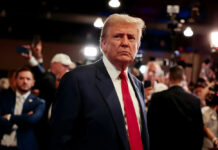
When Trump stepped into the East Room to announce that China had “stolen” 220 million U.S. voter files, he anchored the claim in a tranche of newly declassified intelligence reports his administration released the same day. Those documents do confirm extensive Chinese interest in American political data. A July 2020 CIA wire memo, drawing on FBI and NSA inputs, describes CCP-linked actors targeting personal email accounts of senior U.S. officials and amassing election-related data from U.S. databases, polling firms, political organizations, and campaigns. One analytic summary in that set notes that operatives collected data on more than 204 million Americans, much of it “publicly available for download.”
Additional assessments from the National Intelligence Council and other agencies show Beijing expanding cyber collection related to the 2020 election—probing private-sector entities for information about candidates, campaigns, donors, and voters. They also acknowledge that Chinese services were “probably” trying to gather voter registration information and public opinion data to inform policy and predict electoral outcomes. In other words, the intelligence record supports a picture of broad data acquisition and political analysis by China, but it describes collection, not sabotage.
Trump’s 220 Million Claim Versus the Documentary Record
Trump’s speech moves well beyond the language of those assessments. He frames the activity as “the largest compromise of election data in history,” asserts that China illicitly obtained 220 million voter files, and implies that such data could support fraud and manufactured ballots. The publicly available declassified documents, however, have not yet surfaced a specific memo or page that cites “220 million voter files” as a formal, vetted intelligence conclusion.
Journalists at outlets that reviewed the same intelligence package—including CBS, Nextgov/FCW, and The Daily Beast—reach a consistent judgment: the documents do show China possessing or analyzing more than 200 million U.S. voter‑related records, but they do not show that China “stole” those records in a technical sense or that it altered election infrastructure. Some of the data appears to have been legally purchased from states that sell voter lists, while other portions were scraped from public sources. That distinction between acquisition and theft is crucial; it undercuts the categorical assertion that the entire corpus was “stolen,” and it matters for understanding both the legal exposure and the security risk.
Election Infrastructure: Influence Versus Interference
The most important line in the broader record is not about how many records China held, but what it did with them. The Intelligence Community Assessment on Foreign Threats to the 2020 U.S. Federal Elections, declassified in March 2021, is explicit: the IC found “no indications that any foreign actor attempted or succeeded in altering any technical aspect of the 2020 presidential election vote, including voter registrations, ballots, tabulations or results.” That finding is echoed in a joint Department of Justice and Department of Homeland Security report, which concludes there is no evidence any foreign government-affiliated actor manipulated election results or prevented voting.
Those same assessments do recognize foreign influence operations. Russia worked to denigrate Joe Biden; Iran and China pushed social media activity aimed at weakening Trump; China considered but ultimately rejected more direct efforts to affect the outcome, judging them risky and unlikely to succeed. The Brennan Center and other independent analysts draw the same distinction: foreign powers have engaged in influence—propaganda, social media campaigns, psychological operations—but not proven interference with vote tallies or technical election processes. That distinction is the fulcrum of the entire debate.
How Voter Data Is Collected—and Why “Stolen” Is a Slippery Word
To understand how a foreign actor might end up holding data on hundreds of millions of Americans without breaching election infrastructure, you have to look at how voter information is handled domestically. In many states, basic voter registration data—name, address, party affiliation—is public by statute and available for purchase or download. Fact‑checkers flag North Carolina and Ohio as examples where lists are explicitly sold or released. Campaigns, data brokers, and analytics firms then blend those public files with commercial data, creating large, valuable datasets that sometimes leak or are left unsecured.
The 2018 Deep Root Analytics incident is instructive: a contractor aligned with Trump’s 2016 campaign exposed 198 million voter records when it misconfigured an online database, leaving it accessible to anyone who found the URL. No foreign hack was required; the data was simply sitting open on the internet. Intelligence reports in Trump’s 2026 declassification package describe Chinese actors exploiting precisely this universe—public voter rolls, commercial marketing data, unsecured cloud repositories—to compile huge datasets for identity matching and political analysis. From a cyber‑defense standpoint, that is a serious problem. But it is not the same as penetrating secured election systems to change registrations or votes.
The Demographic and Numerical Problem
The headline number—220 million voter records—sounds dramatic but immediately raises demographic questions. The U.S. has roughly 335 million residents and on the order of 170 million registered voters; claiming that 220 million “voter files” were compromised implies either substantial duplication, inclusion of non‑voter records, or a broader definition of “voter” that sweeps in adult citizens and other politically relevant profiles. Intelligence summaries that mention “204 million Americans’ data” are careful to describe the corpus as personal and election‑related information, not verified, unique voter registrations.
At this stage, the 220 million figure rests mostly on Trump’s rhetoric and on partisan interpretations of the declassified material, such as the RedState framing that “China stole 220 million U.S. voter files.” No memo with a declassification stamp and a line reading “China illicitly acquired 220 million voter registration records” has been publicly produced or cited with a document ID. That does not mean the number is impossible; large‑scale commercial and public datasets can easily reach into the hundreds of millions of rows. But it does mean that treating 220 million as a settled, documentary fact is premature. The evidentiary bar has not been met.
Did Intelligence Officials “Bury the Truth”?
A central political charge in Trump’s speech is not merely that China amassed voter data, but that U.S. intelligence agencies learned of this activity in 2020 and concealed it from the president and the public. Here, the documentary record is thinner. The declassified ICA and related reports show that by mid‑2020, analysts were already tracking Chinese collection of voter data and contemplating its implications. They also show debate within the community about how aggressive China’s intentions were and how much weight to give fragmentary sources.
House Intelligence Committee Democrats, in a 2021 memo, state that “no intelligence to the contrary has ever been provided to the Committee” with respect to the finding that foreign actors did not alter technical election systems. From their vantage point, the community was transparent about its conclusions: foreign powers probed, collected, and ran influence operations, but did not hack vote tallies or registration databases to change outcomes. Trump and his allies argue that those conclusions understate the risk and that internal dissent about China’s intentions was downplayed or delayed. Without the specific internal emails, briefing schedules, and decision logs that would show who knew what when, “buried the truth” remains a political allegation rather than a documented fact.
The Larger Pattern: Sensational Claims, Sparse Technical Evidence
This controversy fits neatly into a pattern that has repeated across recent cycles. Sweeping claims about foreign manipulation—noncitizens voting en masse, hacked voting machines, stolen troves of voter data—tend to arise in moments of political stress. Subsequent technical analyses and official reviews, from CEIR on noncitizen registrants to DOJ/DHS on election systems, repeatedly find that these claims rest on misunderstandings of complex data, mischaracterizations of routine vulnerabilities, or outright fabrications.
The FBI’s IC3, Protect Democracy, and other non‑partisan bodies warn that sensational narratives about foreign election plots are themselves a form of information manipulation: they erode trust, mobilize anger, and can be amplified by foreign actors seeking to destabilize democracies. The declassified intelligence Trump released does not vindicate the most extreme version of his 2020 election allegations; if anything, it underscores that foreign services are aggressively collecting data and running influence campaigns, but still short of the line where they directly change American vote counts.
What Would Settle the Dispute?
For a claim as specific as “China stole 220 million voter records,” the evidentiary path is clear. First, the Office of the Director of National Intelligence or the White House would need to release the particular documents Trump cites, with document IDs, dates, and unredacted passages that establish the number and the method of acquisition. Second, FBI and CISA could publish technical bulletins detailing any confirmed intrusions into state voter registration systems—IP addresses, malware families, data exfiltration logs—tying them to Chinese state actors.
Third, independent cybersecurity firms could assess whether the claimed scope and scale are technically plausible given known infrastructure, and whether evidence of coordinated exploitation—such as fraudulent registrations or ballot requests traceable to the dataset—exists. Finally, Congress could take testimony from the officials who worked these cases in 2020, mapping what they knew about Chinese data collection and when they briefed the president. Until that chain is complete, Trump’s headline claim remains an interpretation layered onto an intelligence record that, in its own words, stops short of election interference.
Why This Matters Going Forward
None of this should comfort anyone about the state of data security. The intelligence record is unequivocal that foreign powers, including China, Russia, Iran, and North Korea, can hack U.S. voter‑related systems and have done so in the broader universe of political and personal data. It is also clear that enormous volumes of sensitive information are effectively exposed by the way public records, campaign data, and commercial analytics are handled in the United States. That exposure makes Americans more vulnerable to identity theft, coercive profiling, and targeted influence operations, even if vote tallies remain intact.
The challenge, for policymakers and citizens, is to address those real vulnerabilities without collapsing every instance of foreign data collection into an unsupported narrative of “stolen elections.” The integrity of elections is a technical question as much as a political one; it depends on systems engineering, audits, and verifiable evidence. The declassified documents Trump has put on the table deepen our understanding of how the CCP thinks about American politics and how aggressively it hunts for data. They do not, on the record available today, prove that China stole the election—or that U.S. intelligence buried proof that it did.
Sources:
redstate.com, theepochtimes.com, nypost.com, instagram.com, youtube.com, facebook.com, timesnownews.com, dw.com, dni.gov, govinfo.gov, nytimes.com, justsecurity.org, justice.gov, brennancenter.org, electioninnovation.org, ic3.gov