
When a U.S. president promises to make a foreign adversary “financially responsible” for war-related damage, what sounds like straightforward toughness rests on one of the murkiest intersections in modern statecraft: sanctions law, sovereign immunity, and the limits of executive power over frozen assets.
Key Points
- President Trump has declared that frozen Iranian assets under U.S. control will be used to compensate ship and cargo damage linked to Iranian attacks in the Gulf, casting the move as “fair and equitable.”
- Iranian officials condemn the plan as an incendiary, dangerous precedent, arguing it amounts to unilateral seizure of sovereign reserves rather than a lawful sanctions adjustment.
- The public record to date shows political declarations, controlled-escrow frameworks, and conditional-release memoranda—but no clear judicial or statutory mechanism already authorizing compensation payments from Iranian central-bank funds.
- This fight sits within a decades‑long pattern: Washington depicting Iranian assets as leverage, humanitarian channels, or potential compensation, while legal processes remain slower, narrower, and far more contested than the rhetoric suggests.
Trump’s Pledge: Turning Frozen Assets into a Compensation Pool
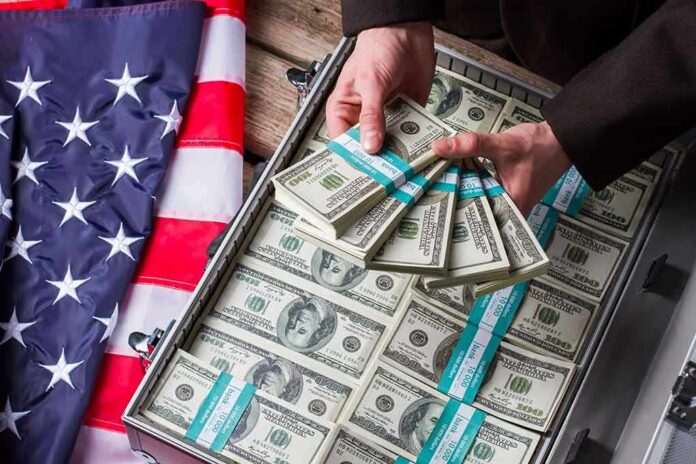
President Trump’s starting point is blunt: any damage to ships or cargo in and around the Strait of Hormuz that his administration attributes to Iran or its proxies will be paid for with “Iranian Money that the United States has in its possession, and controls.” The statement, posted on Truth Social and echoed across multiple outlets, is sweeping in scope—“from this point forth, and until further notice, any and all damages done to Ships, Cargo, or anything related thereto” are covered—and framed explicitly as the “fair and equitable” thing to do. In policy terms, he is attempting to turn blocked sovereign assets into a standing compensation fund, shifting the financial burden of Gulf instability away from shipowners, insurers, and U.S. taxpayers and onto Tehran.
The pledge emerges amid ongoing strikes, proxy attacks, and threats against shipping lanes in the Gulf and Red Sea, where Iran‑linked actors such as the Houthis claim responsibility for attacks on tankers and other vessels. Trump’s message is not just about money; it is a signaling tool in a coercive campaign, pairing sustained military pressure with an economic narrative that Iran will literally pay for the disruption it is blamed for causing. It also dovetails with a broader administration strategy of portraying frozen Iranian funds as flexible instruments of U.S. policy—assets that can be redirected, escrowed, or held indefinitely unless Tehran meets Washington’s conditions.
What Frozen Iranian Assets Are, and How the U.S. Controls Them
To understand what Trump is trying to do, you have to distinguish rhetoric from the machinery behind frozen assets. Under U.S. sanctions, Iranian state and central‑bank funds held in or transiting through U.S. jurisdiction have been blocked for decades, typically by Treasury regulations under the International Emergency Economic Powers Act (IEEPA). These measures stop money from moving, but do not instantly convert it into U.S. property; they are restraints, not outright confiscations. The scale is significant: global Iranian assets frozen under various sanctions regimes have been estimated near $100 billion, though only a fraction is directly controlled inside the United States.
Where the U.S. has moved beyond simple blocking, it has tended to do so through narrowly tailored arrangements. In the prisoner‑swap deal that freed $6 billion in Iranian funds from accounts in South Korea, the money was transferred to escrow accounts in Qatar with explicit restrictions: it could be used only for humanitarian trade—food, medicine, and other civilian goods—under U.S. oversight. Treasury officials emphasize that such funds remain, in practical terms, hostage to U.S. approval: they sit in channels that require U.S. sign‑off for every disbursement. The Trump administration’s own memorandum‑of‑understanding framework for a broader Iran deal appears built on similar logic—escrow, earmarking, and conditional release keyed to Tehran’s behavior and the progress of negotiations.
From Escrow to Seizure? The Legal Gap in the Compensation Story
Where Trump’s shipping‑damage pledge moves onto much thinner ice is the leap from “we control the channel” to “we can unilaterally divert those funds to third‑party claimants.” Existing public reporting on the administration’s MOU and sanctions apparatus describes tight control over how unfrozen funds can be used—often restricted to U.S. food and medical exports or other humanitarian categories—and stresses that money “will never touch Iran” unless conditions are met. A U.S. official quoted by CNBC, for example, underscores that no frozen funds will leave the channel without Iran meeting specific requirements and that the United States must approve every use. These are the hallmarks of an escrow regime, not a cleared path to finance maritime damage awards.
Critically, the available record does not show a judicial or statutory process that has already tied identified ship or cargo losses to Iran and then authorized payment from Iranian sovereign assets. There is, at least in public, no court judgment, arbitral award, or dedicated claims tribunal that has pierced Iran’s sovereign immunity and ordered central‑bank funds held in New York or other U.S. venues to be used as compensation for Gulf shipping incidents. Even past attempts to tap Iranian central‑bank assets for terrorism‑related judgments have run into jurisdictional limits: the International Court of Justice ruled in 2023 that it lacked jurisdiction over $1.75 billion in Bank Markazi assets held at Citibank in New York, underscoring how contested such seizures can be.
Tehran’s Response: Sovereign Assets and “Dangerous Precedent”
Iran’s leadership has seized on this gap, framing Trump’s plan not as a hard‑nosed extension of sanctions but as an outright illegal seizure of sovereign property. Foreign Minister Abbas Araghchi has warned that diverting frozen assets to pay for shipping losses would set a “dangerous” and “incendiary precedent,” raising the specter of financial chaos if powerful states start unilaterally reassigning central‑bank reserves held abroad whenever conflicts flare. In Tehran’s narrative, frozen assets are still Iranian funds, subject to international law protections, and any forced redirection to third parties without Iran’s consent crosses from sanctions enforcement into expropriation.
Iranian officials have also pushed back on specific U.S. characterizations of how unfrozen money can be used. When Trump and his advisers suggested that released funds would be limited to buying American farm products and medical supplies, Iran’s central bank governor publicly denied that the governing memorandum imposed such purchase restrictions, accusing Washington of misrepresenting the terms. That dispute speaks to a deeper mistrust: each side accuses the other of selectively framing the same instruments—escrow accounts, MOUs, sanctions waivers—to serve its diplomatic narrative. For Iran, Trump’s shipping‑damage pledge looks less like legal innovation and more like another example of the U.S. redefining obligations over assets already frozen under contested authority.
The Pattern: Leverage, Humanitarian Channels, and Political Theater
What makes this episode intelligible is the broader pattern of U.S.–Iran asset politics over the last decade. Successive administrations have repeatedly used the language of frozen funds as leverage, compensation, or goodwill, while the underlying legal architecture remains tightly constrained. When Trump lambasted earlier deals for “giving” money to Iran, and later considered unfreezing tens of billions in Iranian assets as part of a new peace framework, the same pool of reserves was alternately portrayed as dangerous concessions, necessary bargaining chips, and potential financial relief for allies harmed by Tehran’s actions.
Independent analysis of more recent asset releases has reinforced how far political rhetoric can drift from legal reality. FactCheck.org’s examination of the $16 billion in unfrozen Iranian funds in a later prisoner‑swap deal stressed that this was Iranian money, held abroad and subjected to restrictive channels, not a U.S. budgetary transfer. The funds could be used only under specific humanitarian conditions, overseen by Treasury, and did not represent a blank check for Tehran. Trump’s latest pledge fits squarely into this tradition of maximalist framing: he speaks as though the United States holds a discretionary pool of enemy cash that can be reassigned at will, but the documented mechanisms show carefully fenced‑off accounts whose uses are negotiated, supervised, and often litigated.
Where the Real Disagreement Lies: Authority, Not Custody
On one basic point, both sides’ public messaging converges: the United States, through its sanctions and waiver system, does exercise substantial control over key Iranian assets, whether inside U.S. jurisdiction or in escrow arrangements abroad. Trump’s Truth Social post, U.S. officials’ descriptions of the MOU, and Treasury’s role in managing humanitarian channels all assume that Washington can block or permit movement of those funds. Side B’s counter‑case does not seriously dispute custody; it targets the claimed authority to unilaterally change the purpose of those funds from leverage or humanitarian trade to direct compensation for private economic losses.
That distinction matters for readers trying to assess how much of Trump’s pledge is already grounded in law. A president can announce broad intent to seek compensation from frozen assets, and can arguably push DOJ and Treasury to explore pathways under existing statutes like IEEPA or terrorism‑victim legislation. But absent a clear, public legal opinion, new statute, or court order, the step from control to unilateral diversion remains contested. Iran’s denunciations are diplomatic, not judicial; they do not by themselves prove illegality. Yet the lack of document‑level evidence on the U.S. side—no published MOU text authorizing compensation, no interagency opinion on sovereign immunity and maritime claims, no identified statutory vehicle for rerouting central‑bank funds to shipowners—means Trump’s promise today reads primarily as a political commitment, not an already‑operational legal mechanism.
Implications: For Shipping, Sanctions Credibility, and Financial Order
For shipowners and cargo interests operating in the Gulf, the immediate question is whether Trump’s declaration translates into a predictable claims process or remains a deterrent slogan. As of the reporting available, the administration has not detailed how losses would be documented, how causation to Iran would be determined, or how payments from frozen assets would be calculated and distributed. Without those specifics, insurers and operators will treat the pledge cautiously, as part of the political risk landscape rather than a reliable source of recovery. Market behavior responds to enforceable mechanisms; rhetoric alone rarely moves underwriting standards or route choices.
At a system level, the stakes are larger. If the United States were to establish—and successfully defend—a precedent of using another state’s frozen central‑bank assets to compensate third‑party victims of that state’s alleged aggression outside a clear legal judgment, it would mark a significant evolution in sanctions practice. Advocates might argue it strengthens deterrence and aligns economic punishment more directly with harms caused. Critics, including Iran, see the path to asset politicization: great powers recasting sovereign reserves as contingent pools available for whatever “fair and equitable” purpose they define in the moment.
That tension goes to the heart of why frozen assets have become such a recurring flashpoint in U.S.–Iran relations. They are at once accounting entries, legal instruments, and political symbols. Trump’s vow to make Iran pay for ship damage with its own money is a vivid distillation of that mix—assertive, clear to the public, and aligned with a broader hard‑line posture. The evidence so far supports the reality of U.S. control over key Iranian funds and a genuine policy desire to put them to compensatory use. It does not yet show that the legal bridge from control to compensation has been fully built.
🇺🇸🇮🇷 Trump needs Iran to give him a face-saving victory, but they've deliberately decided to deny him one.
Trump expected this war to end within weeks.
Instead, months later, he's venting at aides, insulting Iranian leaders, and growing increasingly frustrated that the war… pic.twitter.com/ktN4eNsMxj
— Mario Nawfal (@MarioNawfal) July 24, 2026
Sources:
military.com, aljazeera.com, nypost.com, bloomberg.com, youtube.com, nytimes.com, ndtv.com, thehill.com, timesofisrael.com, iranintl.com, biz.chosun.com, aa.com.tr, factcheck.org, ajupress.com, bbc.com