
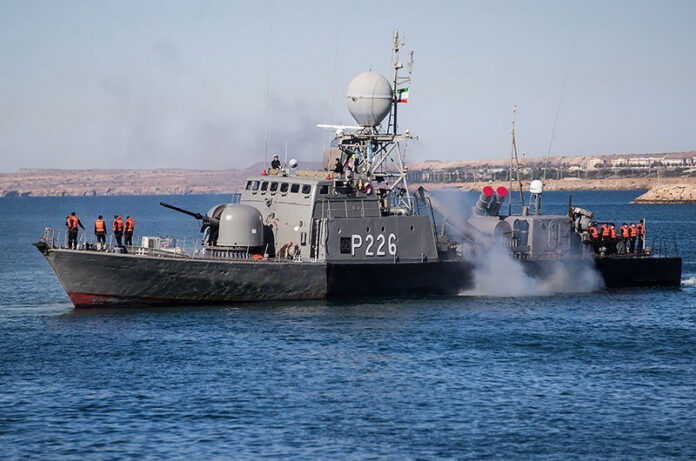
President Trump authorized U.S. military forces to attack Iranian vessels laying mines in the Strait of Hormuz, escalating tensions in the critical waterway that handles global oil shipments. The operation comes as U.S. Central Command reports redirecting 33 commercial vessels since imposing a blockade against Iranian ports, leaving the vital trade route at a standstill.
Military Confrontation Intensifies
U.S. forces boarded another tanker suspected of smuggling Iranian oil as part of the expanding maritime standoff. Iran’s Foreign Minister Abbas Araghchi declared that battlefield operations and diplomatic efforts represent coordinated fronts in the same conflict. The statement appeared to counter Trump’s claims of internal divisions within Tehran’s leadership. Araghchi emphasized that Iranian state institutions continue operating with unity and discipline despite international pressure targeting the regime.
Iran’s Supreme Leader Mojtaba Khamenei warned citizens against enemy media operations designed to undermine national security. Trump responded on Truth Social, asserting he faces no pressure to end the confrontation quickly. The president stated Iran’s clock is ticking while America maintains the stronger position. Trump added that any deal would only materialize when appropriate for American interests and regional stability.
Israel-Lebanon Ceasefire Talks Move to White House
Ambassador-level negotiations between Israel and Lebanon shifted to the White House, with Trump personally greeting both representatives. Secretary of State Marco Rubio joined discussions originally scheduled for the State Department. The talks follow last week’s historic meeting that produced a fragile 10-day ceasefire between the nations. U.S. Ambassador to Israel Mike Huckabee returned to Washington specifically for these negotiations, joining State Department councilor Michael Needham and U.S. Ambassador to Lebanon Michel Issa.
Israeli strikes in southern Lebanon reportedly killed journalist Amal Khalil and wounded another reporter Wednesday, complicating the delicate ceasefire arrangement. The State Department declined immediate comment on the incident.
Economic Impact on Americans
Trump acknowledged Americans will experience higher gas prices during the Iran confrontation, describing it as a temporary sacrifice. The president justified the economic pain by emphasizing the goal of preventing Iran from obtaining nuclear weapons capable of destroying American cities. Trump characterized nuclear proliferation as the worst possible threat facing the nation and the broader Middle East region. The administration maintains that denying Tehran nuclear capability outweighs short-term fuel cost increases for consumers.